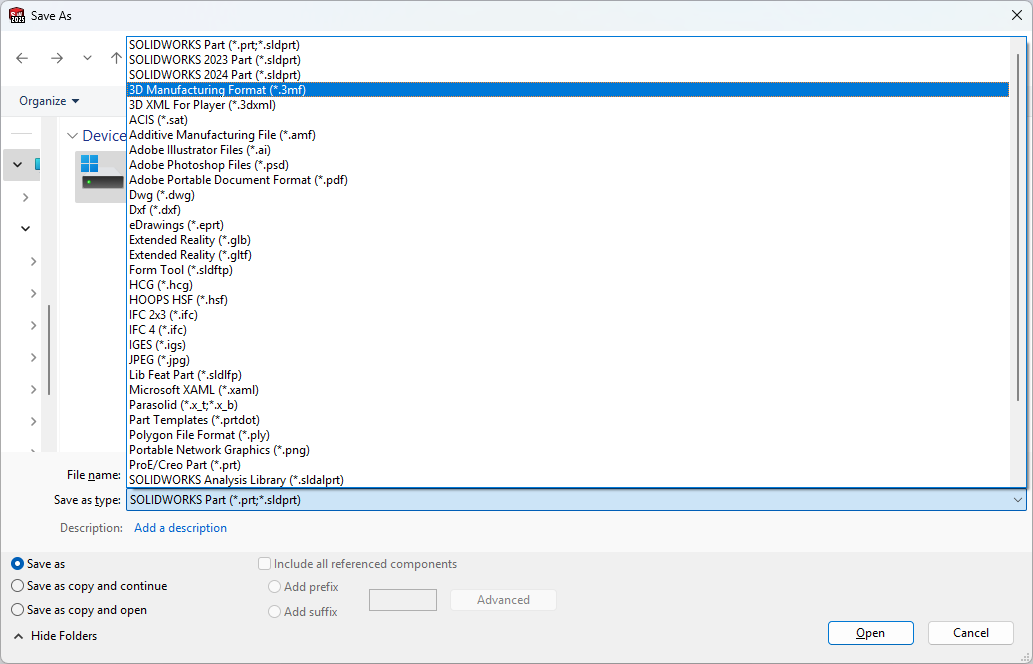
Once I had finished Setting up my First 3D Printer, I wanted to design and print custom models. The Anycubic Slicer Next software can only open 3mf files. Being new to this space means that I had never even heard of this format before. Here are some useful resources for learning more about it:
Download the latest release from the releases page. This is a .zip archive.
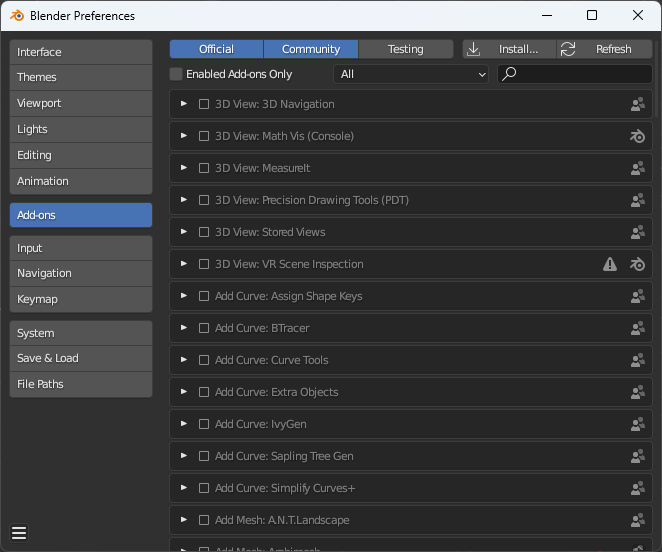
In Blender, go to Edit -> Preferences and open the Add-ons tab on the left.
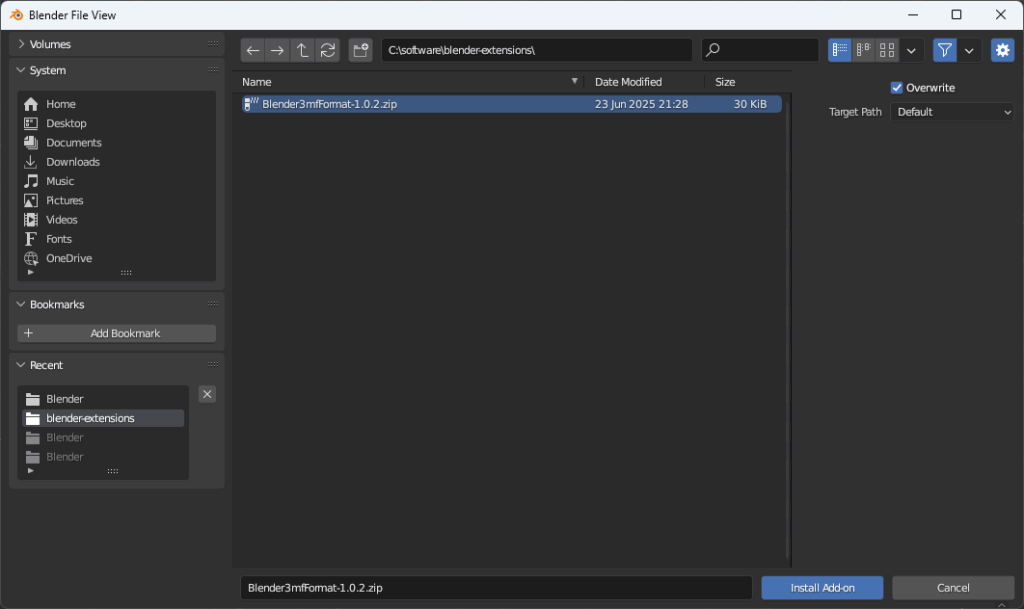
Click on the Install… button at the top. Navigate to the .zip you downloaded.
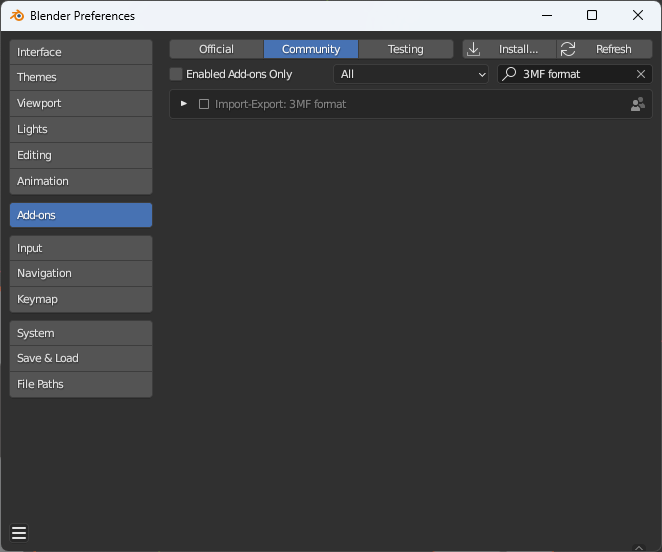
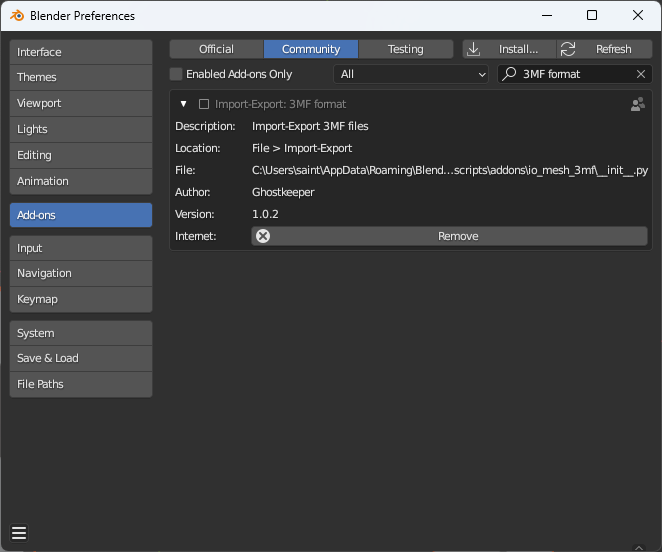
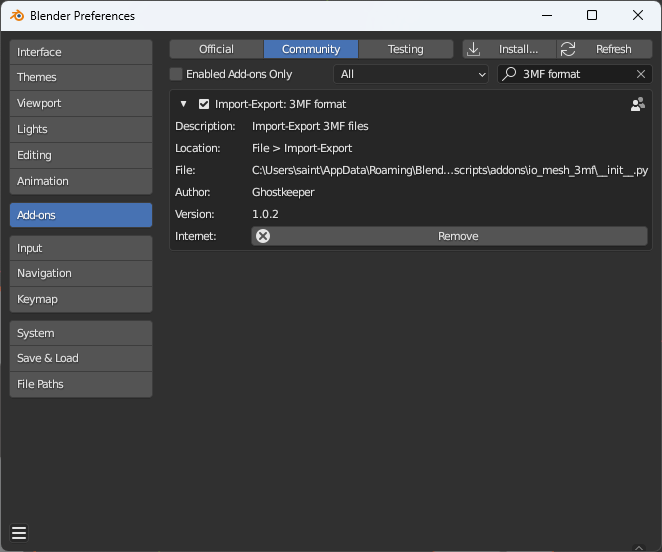
Under the “Community” category, find the add-on called “Import-Export: 3MF format”. Make sure that it’s enabled. (Note: If searching with the search box, exclude the “Import-Export” text since this is the category, not part of the add-on name. Just search for “3MF” instead.)
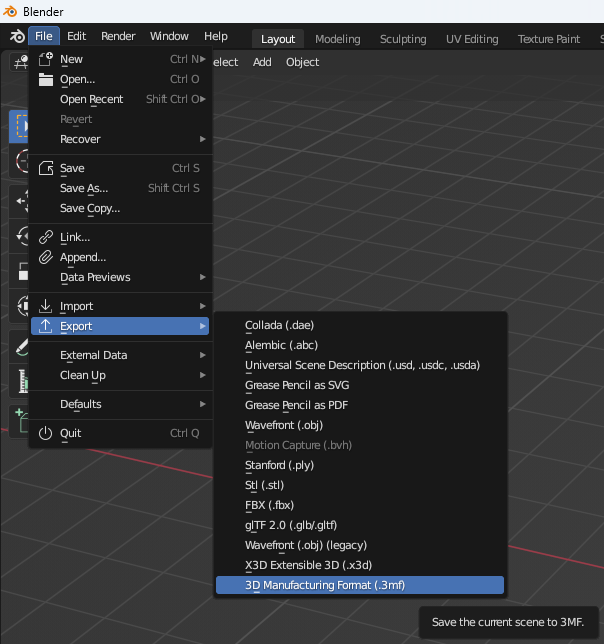
As promised on the plugins page, the export option is now available:
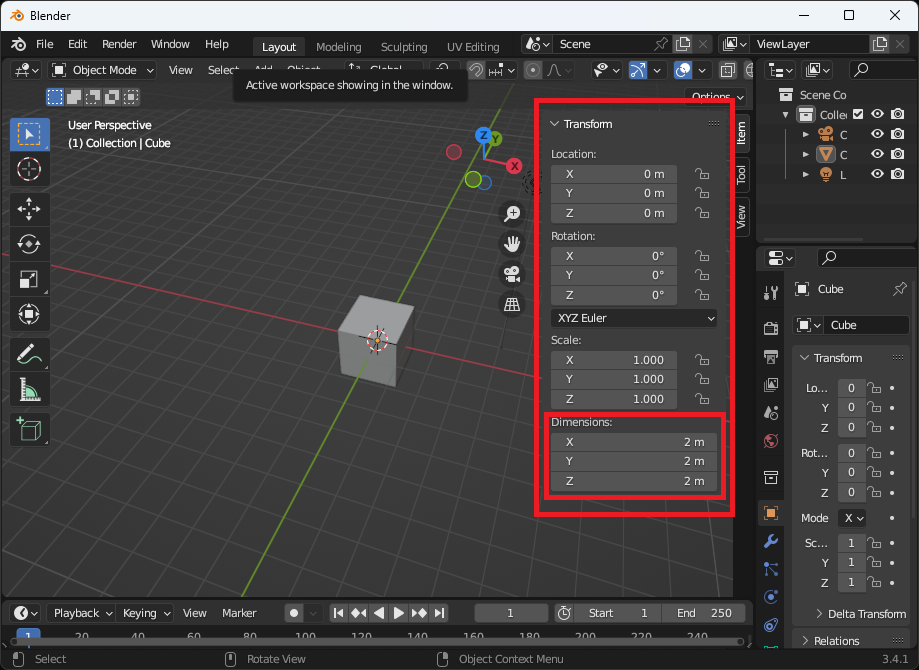
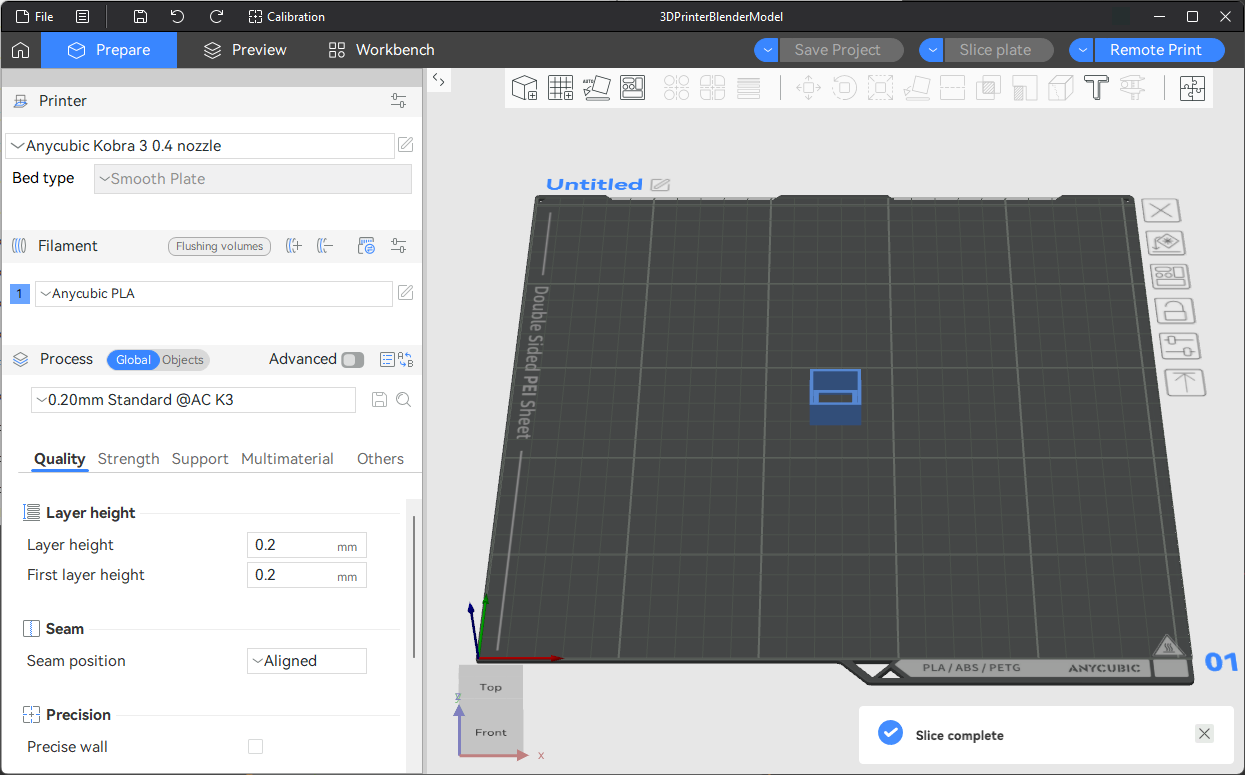
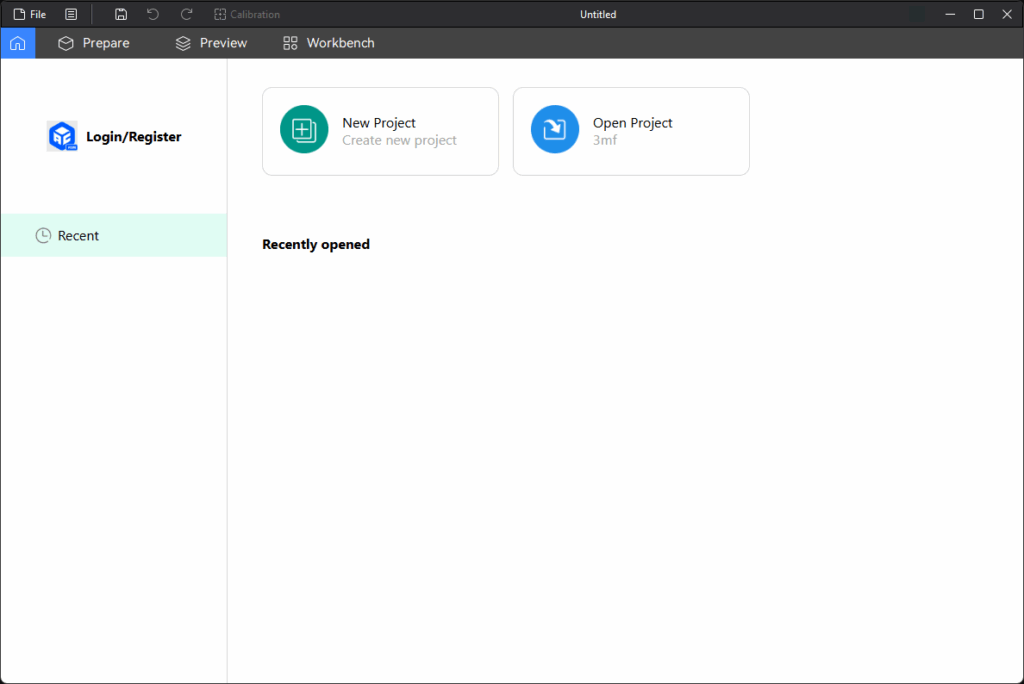
Note that there is a “Scale” option on the export dialog. I just ensured my dimensions were real world dimensions. Here is the simple blender model I made in the Anycubic Slicer Next software. I was able to successfully print it.
Anycubic Slicer Next with a 3mf exported from Blender
The assembly process took me just under a week since I did just a little bit each day. The manual has a QR code for the installation instructions video, Assembly for Anycubic Kobra 3 Combo:
The assembly process was smooth overall, especially because the video clarified some of the instructions. I wasn’t sure how to install the filament tubes into the print head because I did not know how far they should go into the print head. I noticed in the video that their filament tubes had a black ring on the tubes (which mine didn’t) but that was enough to let me know it was safe to push them further into the print head until they were firmly in. I also didn’t pay attention to the orientation of the filament when I loaded it into the ACE (Anycubic Color Engine), but it still worked fine in with my 180-degree rotation around the z-axis.
The print head and print bed did not seem to be shaking so I didn’t adjust the hexagonal isolation columns located underneath the print head/bed respectively. Another instruction in the “Check before use” section was to manually move the print head and print platform then if there is any difficulty or abnormal noise during the movement, adjust the tensioners to ensure smooth sliding of the print head or platform. I had no idea what the right tension was. I hazarded a guess and proceeded to powering on the machine.
Printing my First Model
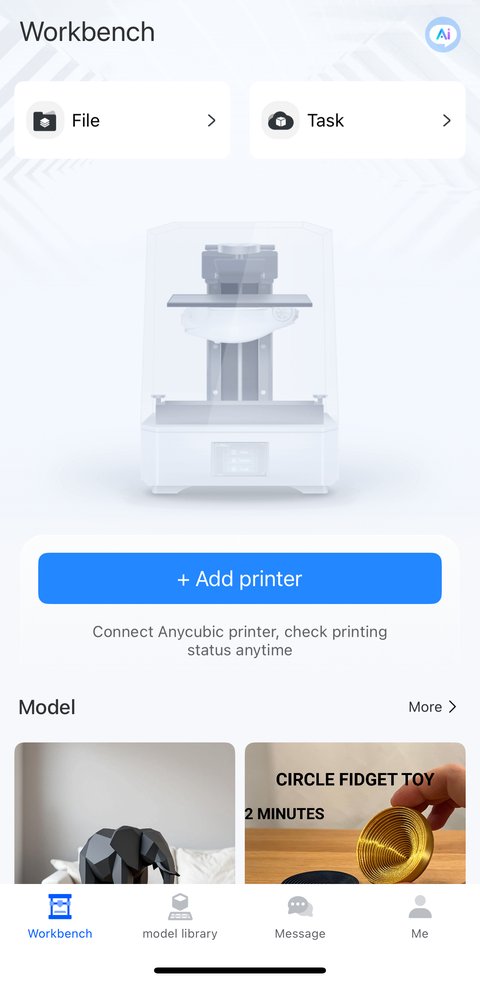
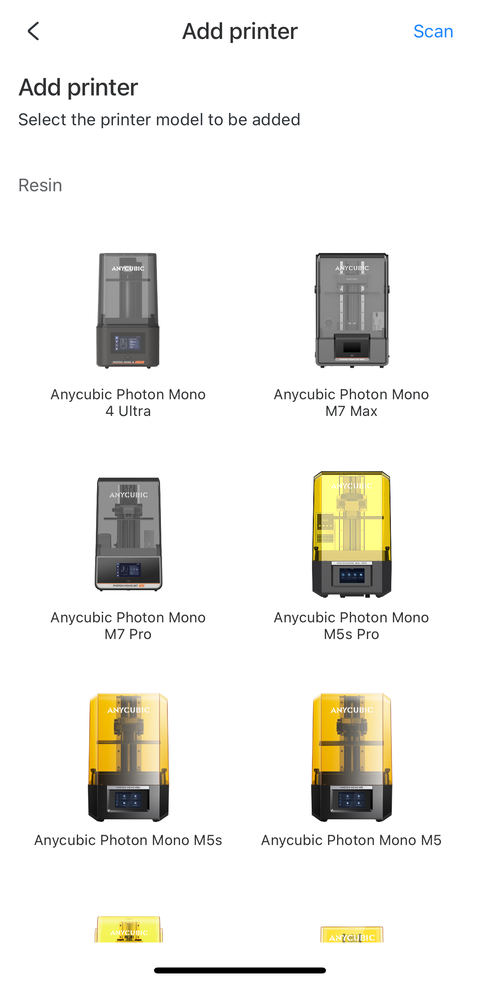
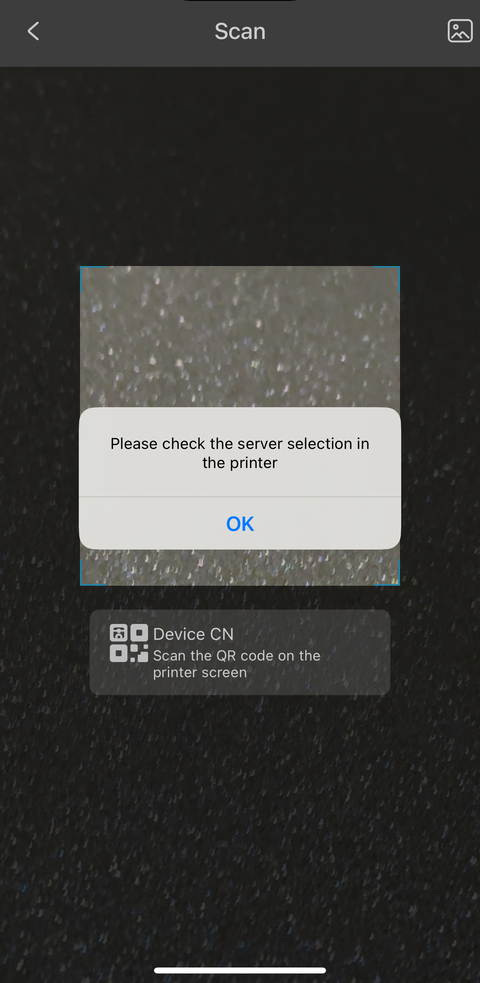
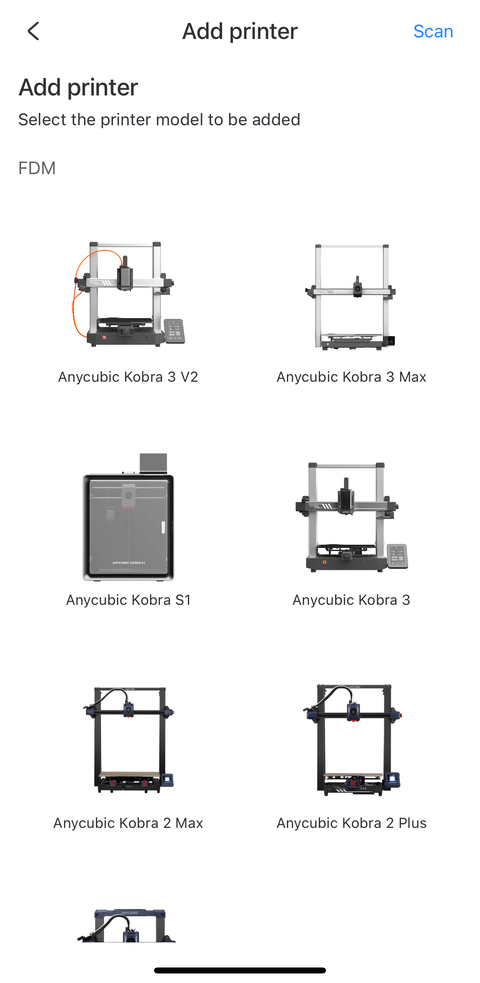
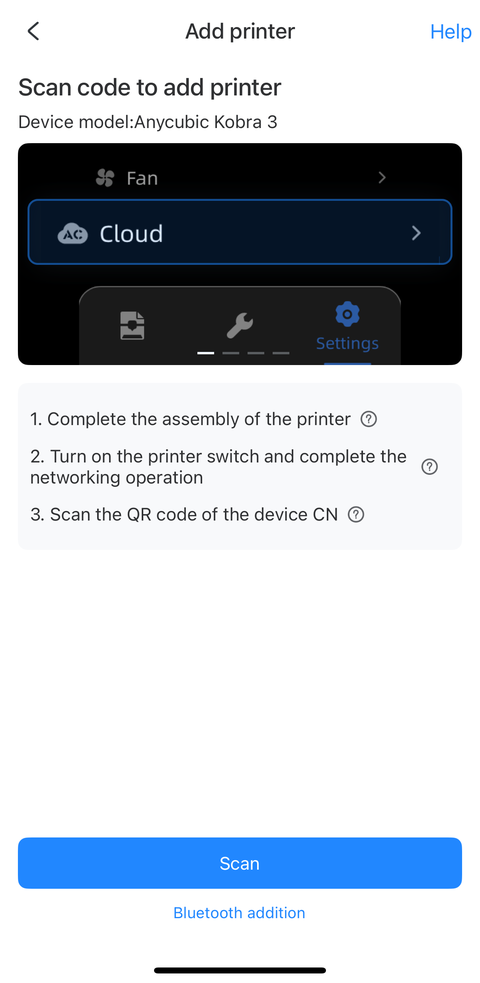
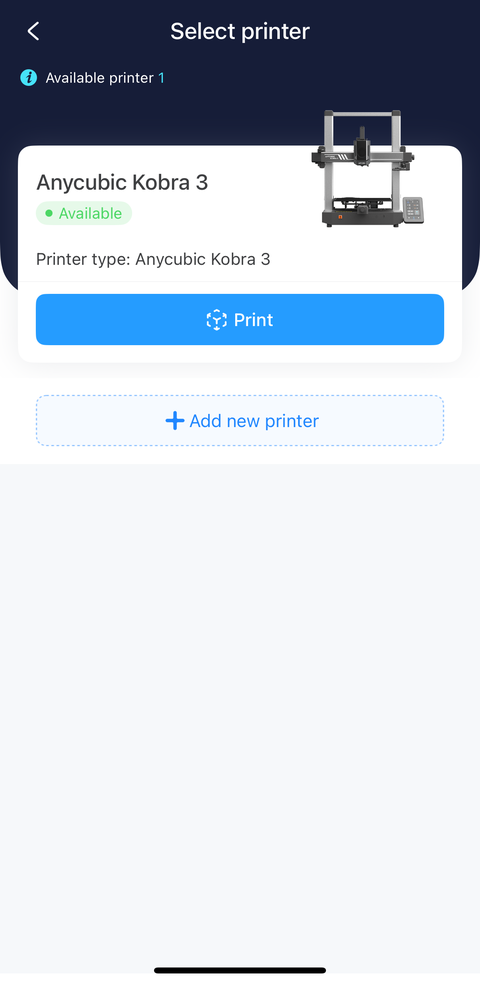
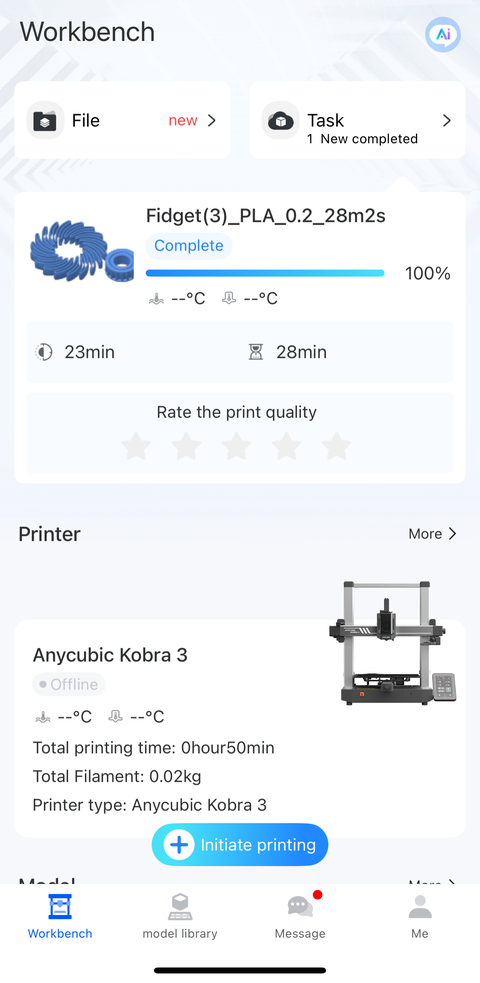
After powering up, the Kobra 3 displayed a QR code on its screen linking to the Anycubic app. The next step was to add the Kobra 3 printer after the app was installed and I registered a new account. I tried scanning the QR code on the printer screen, but it failed with an error about checking the server selection on the printer. I wasn’t sure what that was referring to since I had just connected the printer to my Wi-Fi without any “cloud” setup. I think I ended up selecting the printer by model in the app but still had problems connecting to it. I decided to install the desktop software to see if I could make progress that way. I think it was after I set up the Anycubic Slicer Next software on my desktop that I was able to connect to the printer in the app on my phone.
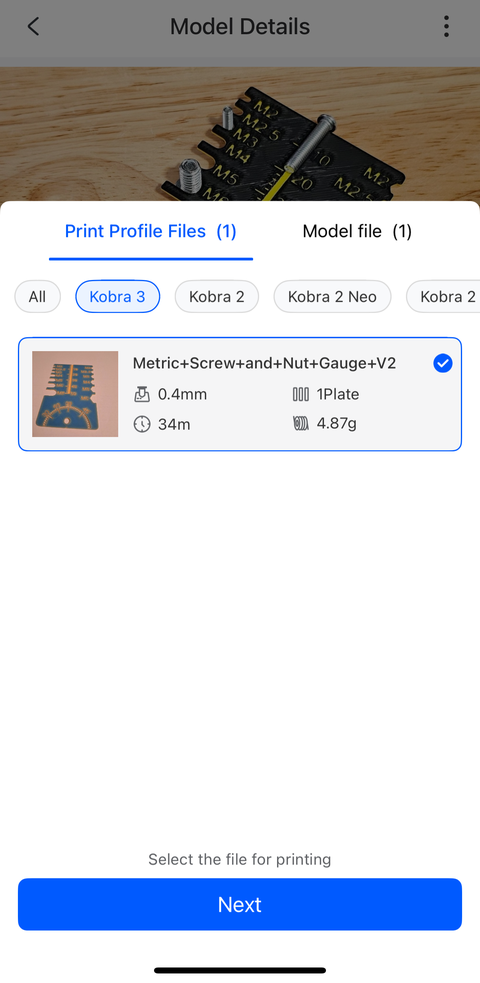
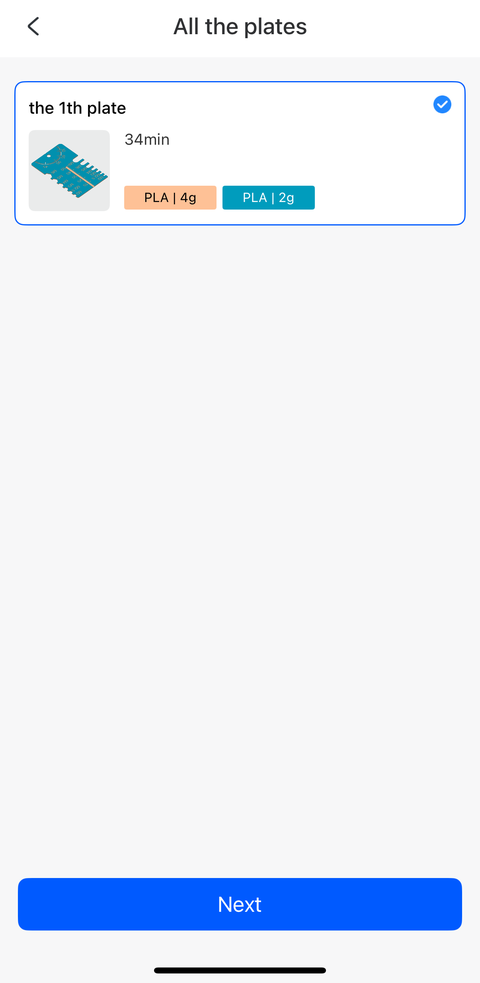
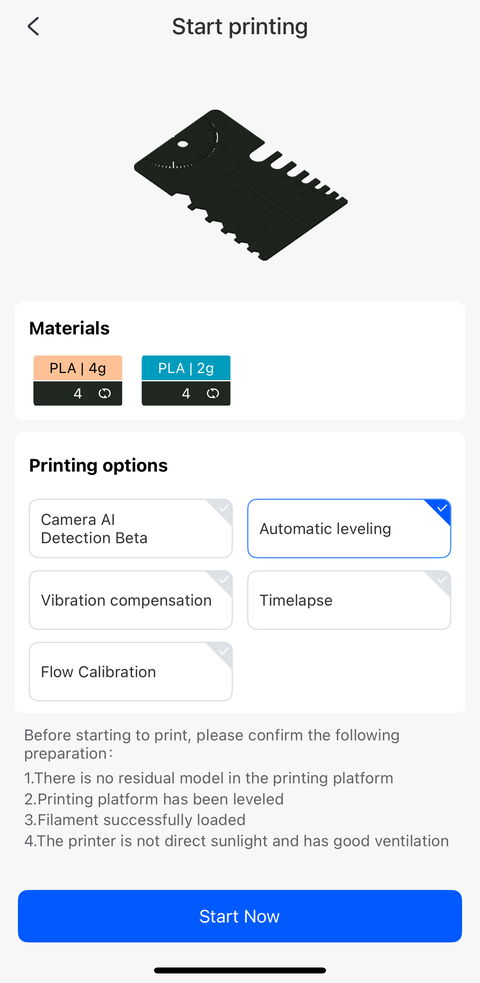
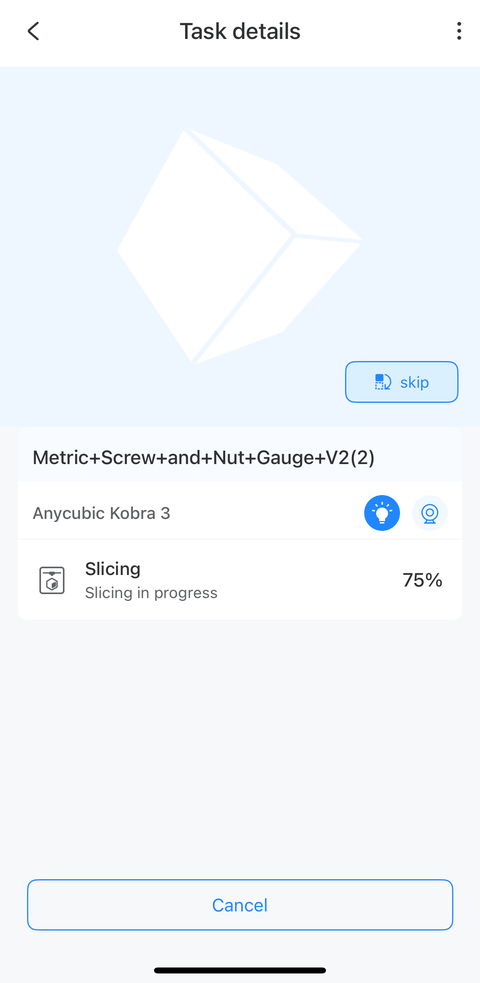
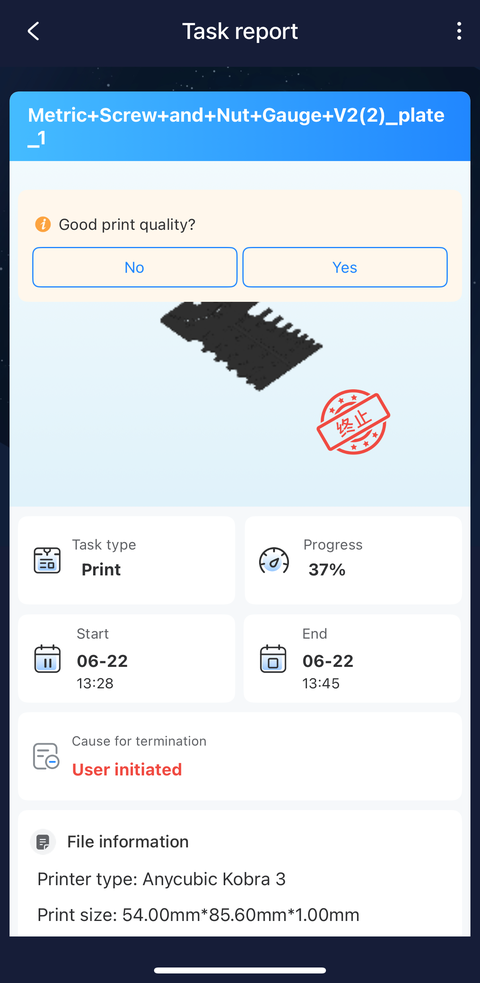
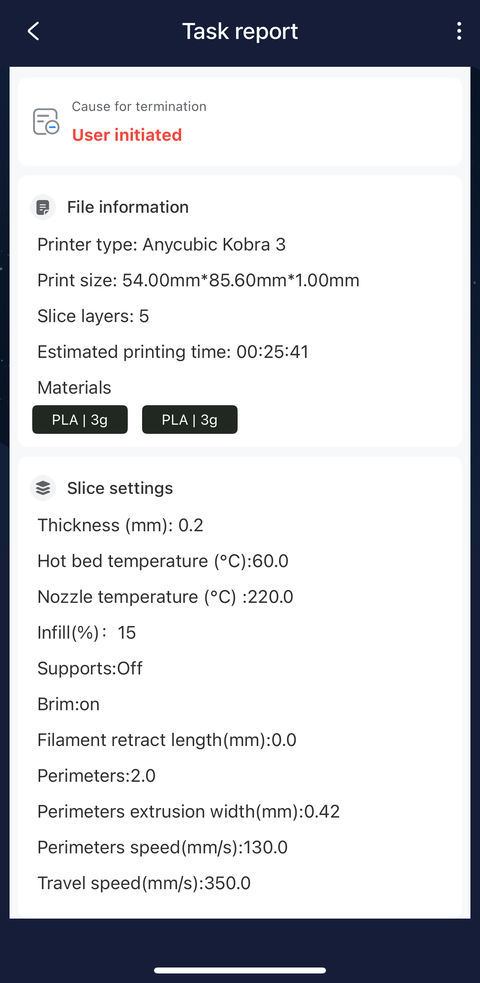
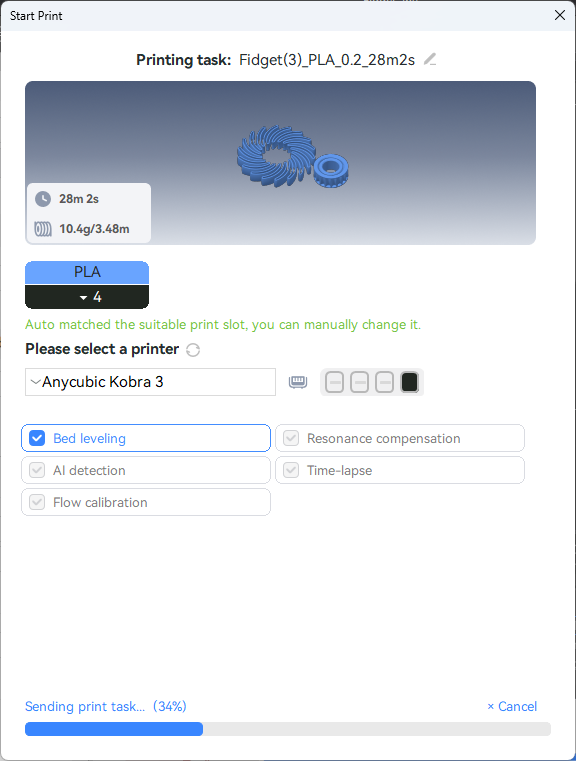
I looked around for what to make for my first ever print run and settled for this metric screw and nut gauge (whatever it is). Unfortunately, the printer kept moving closer and closer to the y-axis edge. It looked like it was going to try to print off the build platform so I canceled the task.
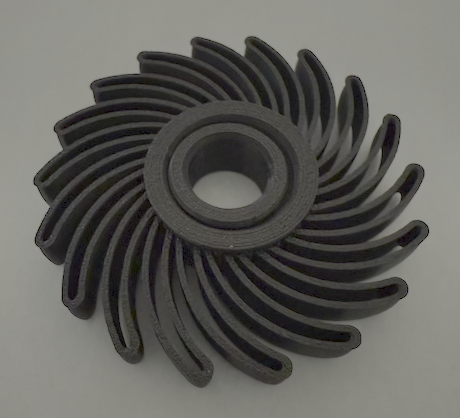
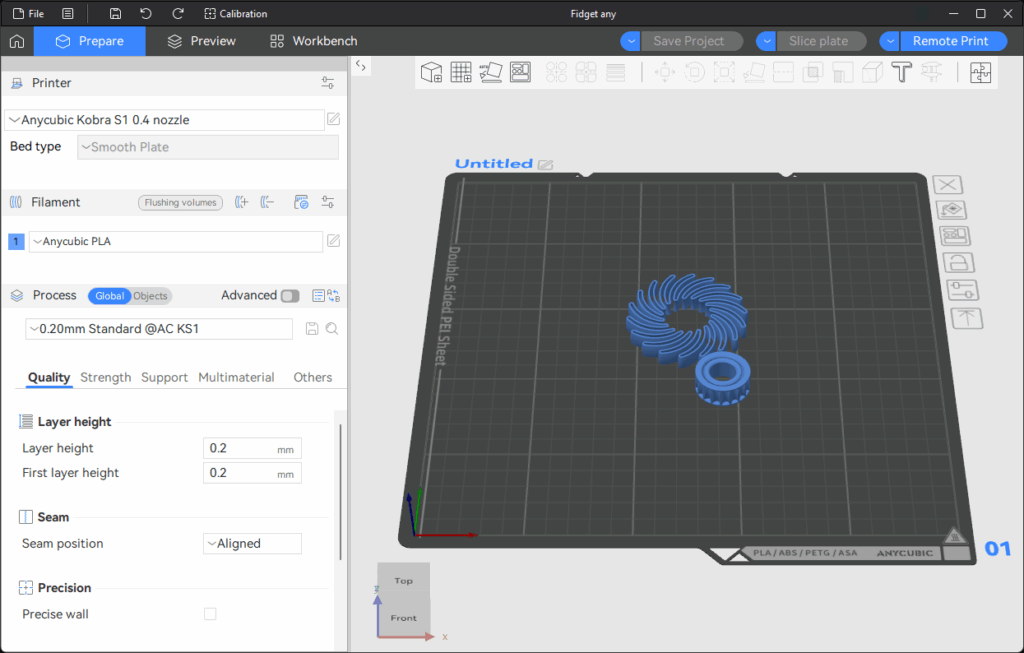
I decided to print a different model, a simpler one, to see if perhaps the model is at issue. This (mostly) circular fidget toy seemed ideal because its dimensions meant that it had to be centered on the build platform.
3D-printed Downloaded Fidget Toy
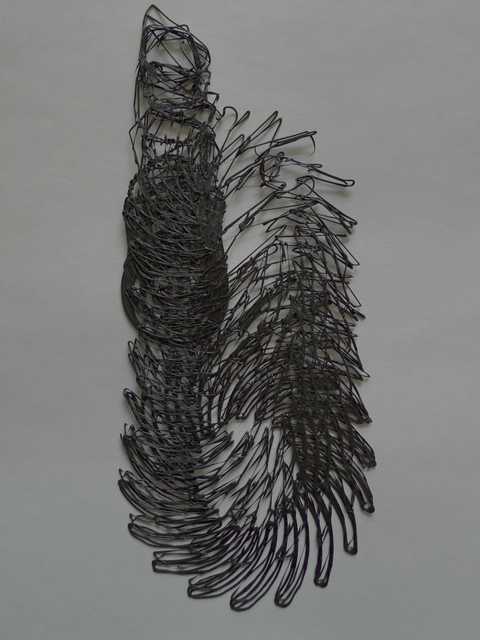
The first time I tried to print this model, it failed with the printer almost overrunning the build platform (just like it did with the previous model):
Broken 3D-printed Downloaded Fidget Toy
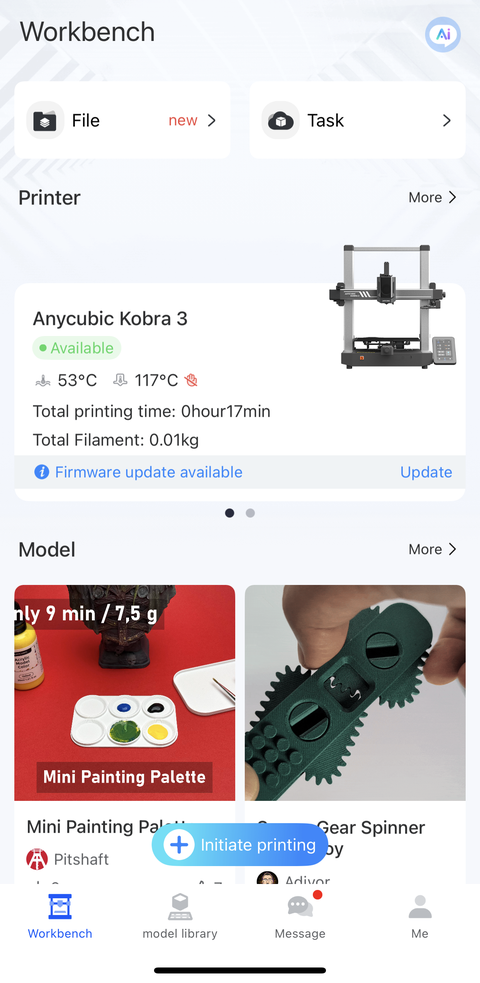
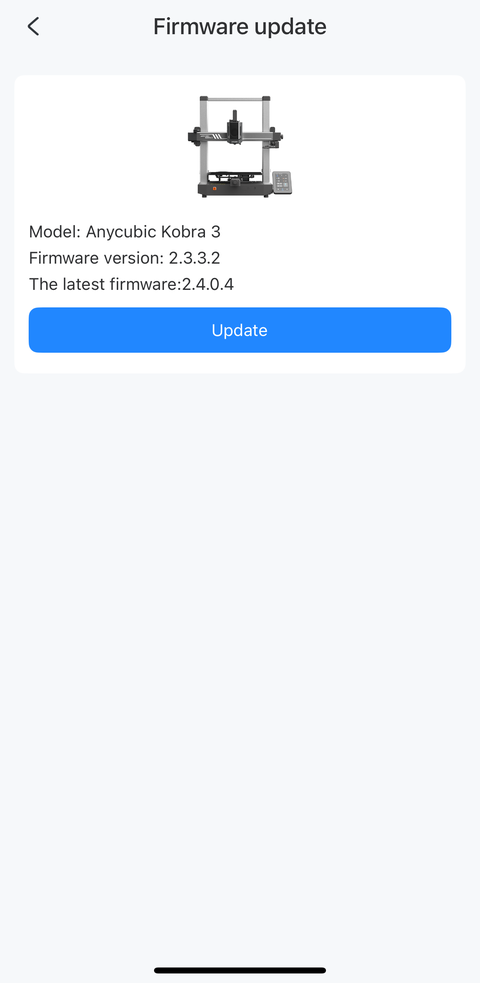
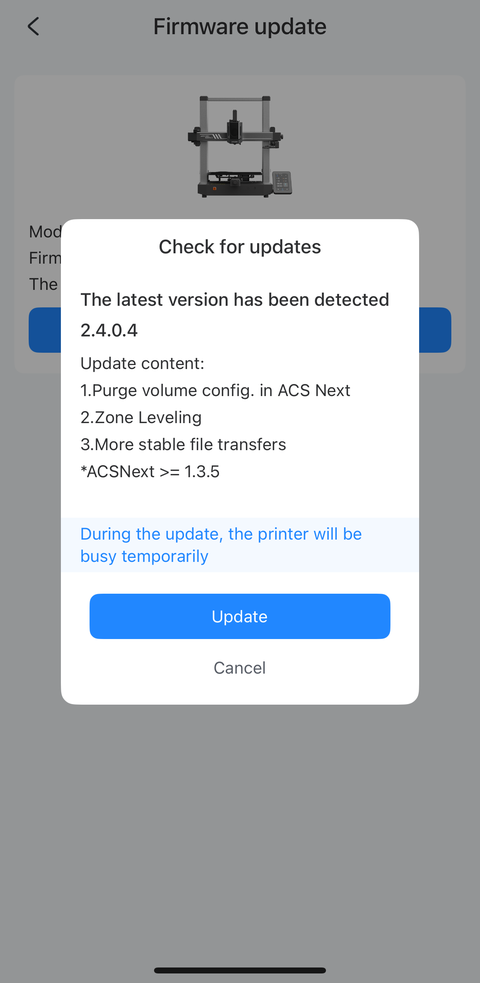
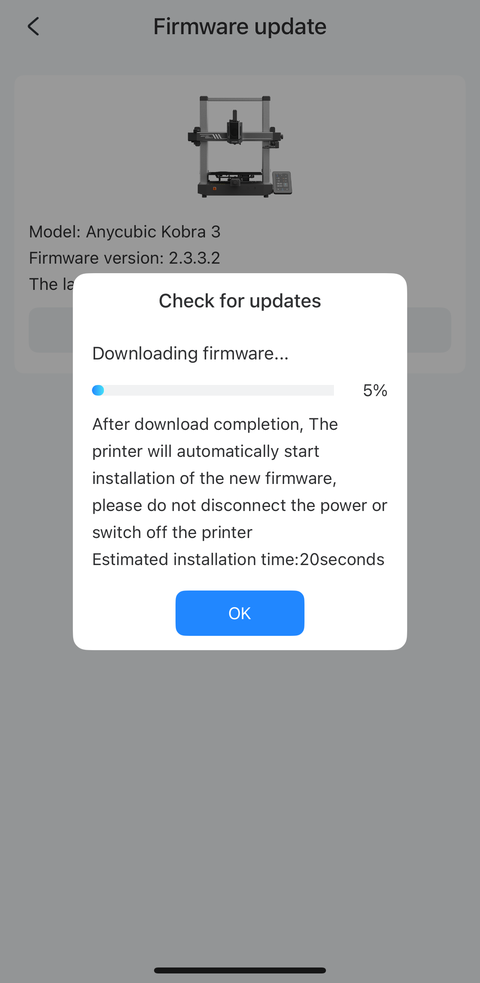
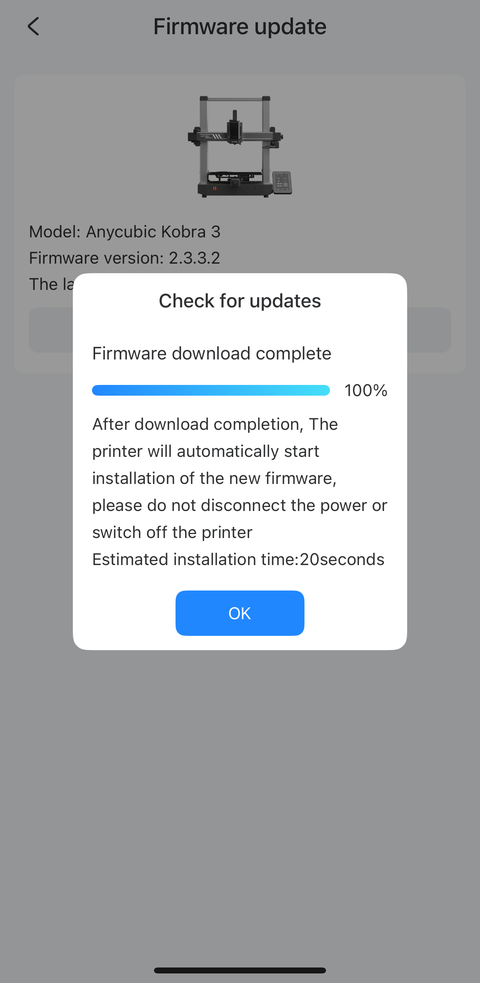
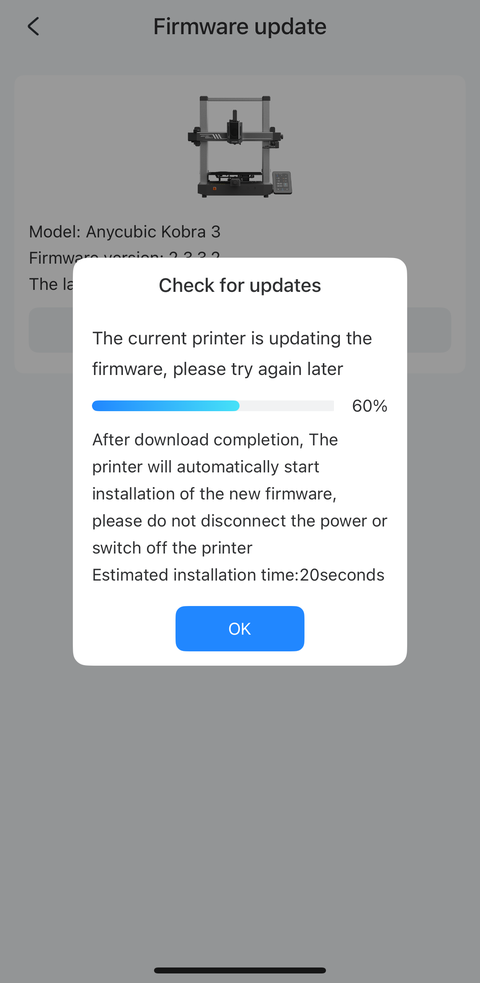
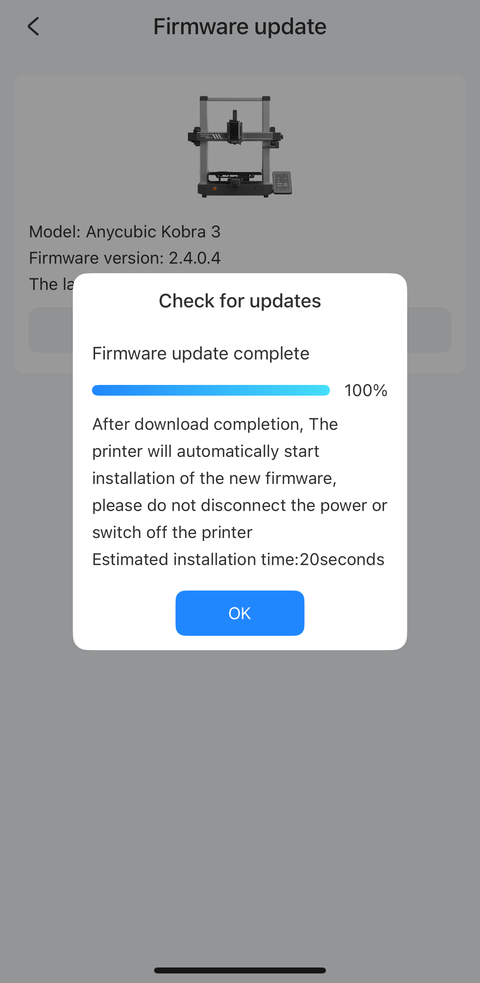
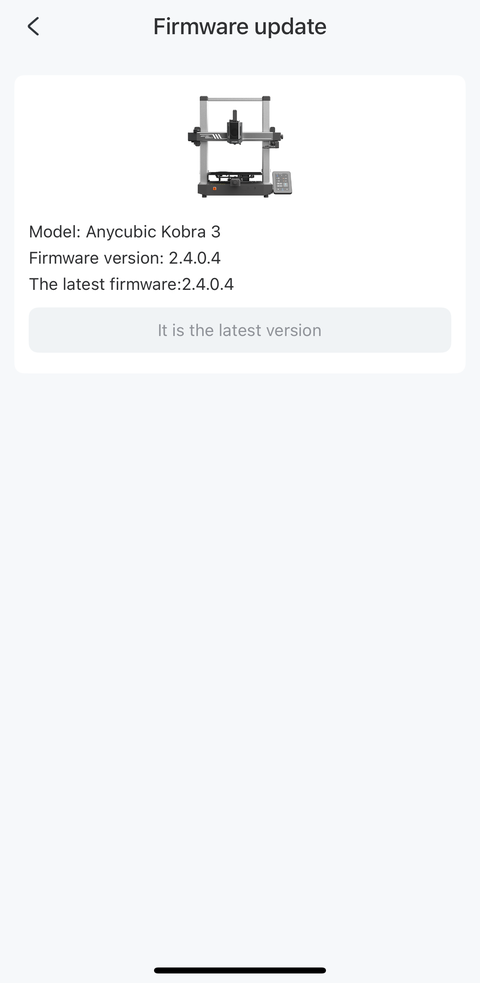
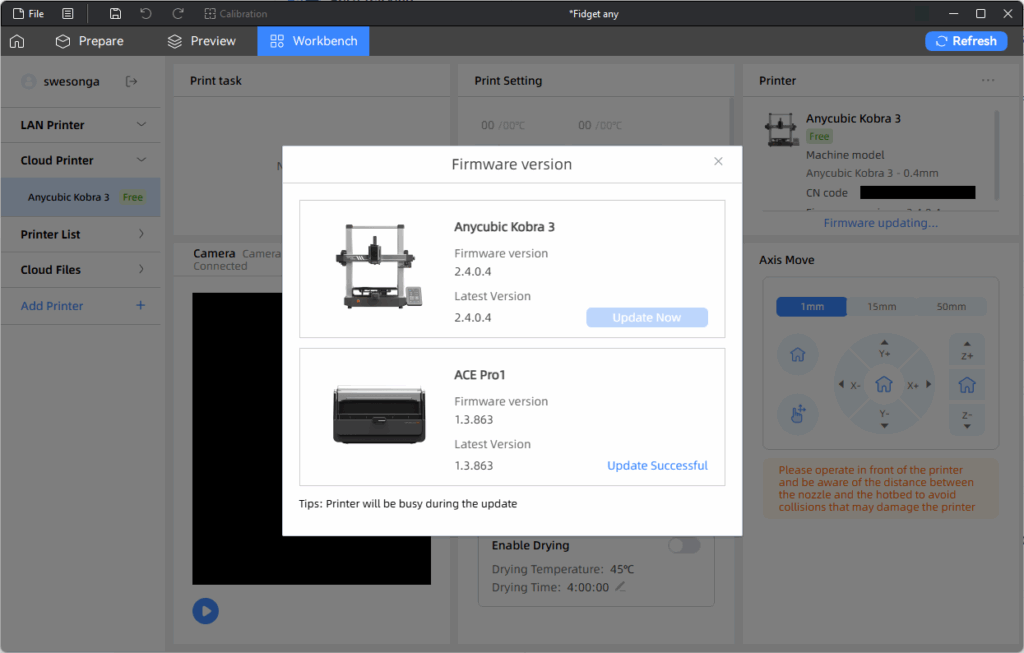
I cancelled that task and upgraded the printer’s firmware:
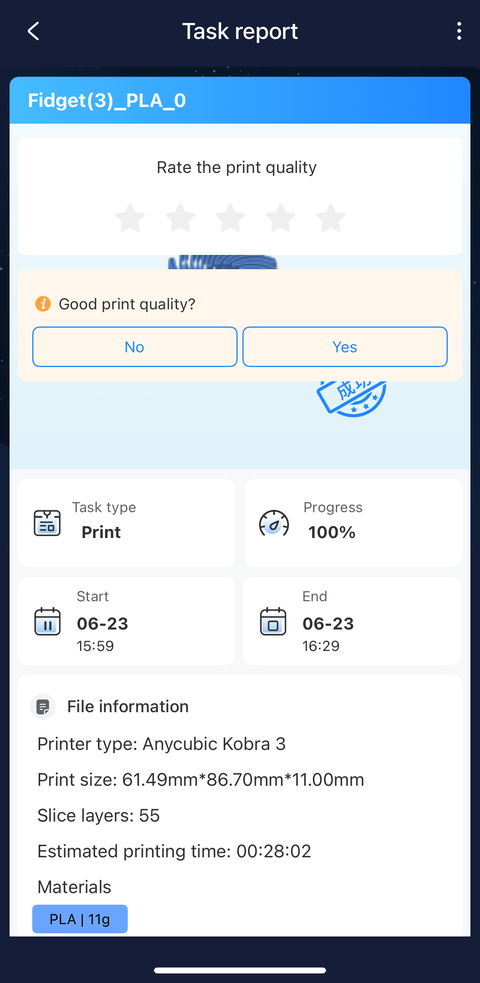
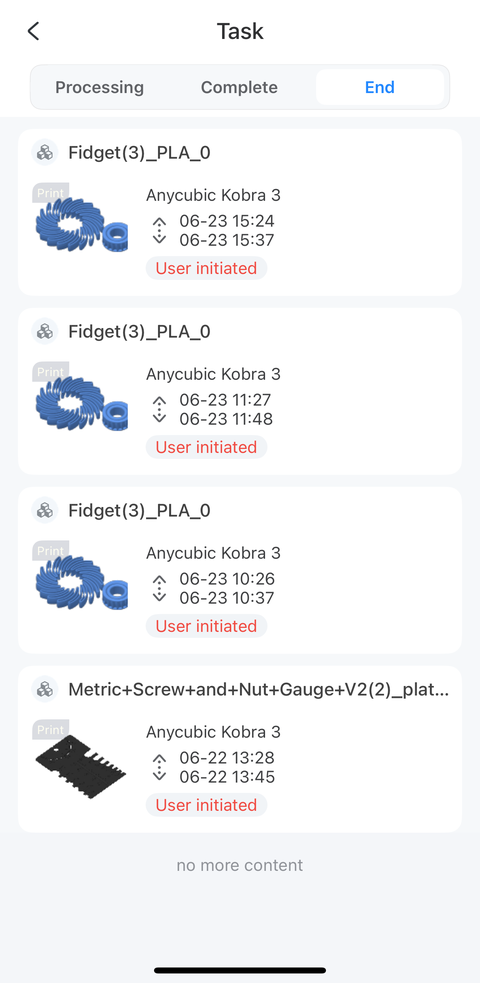
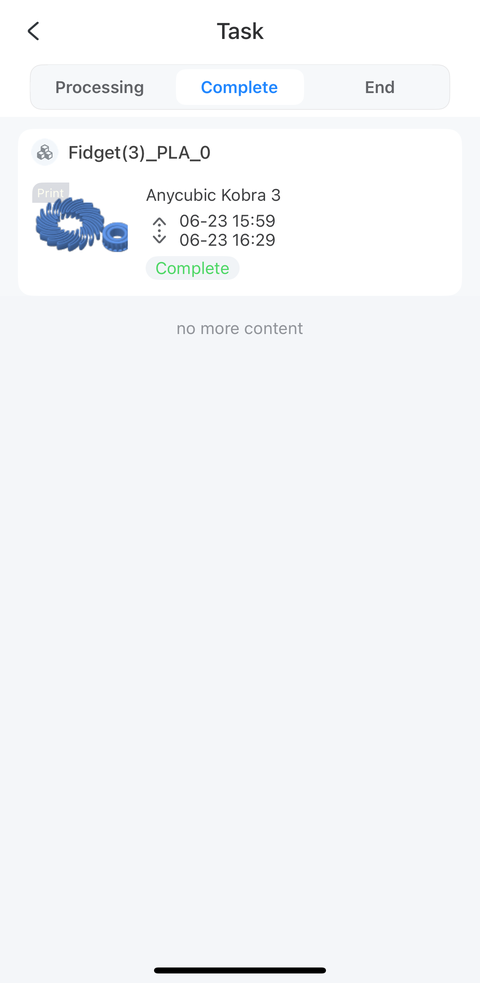
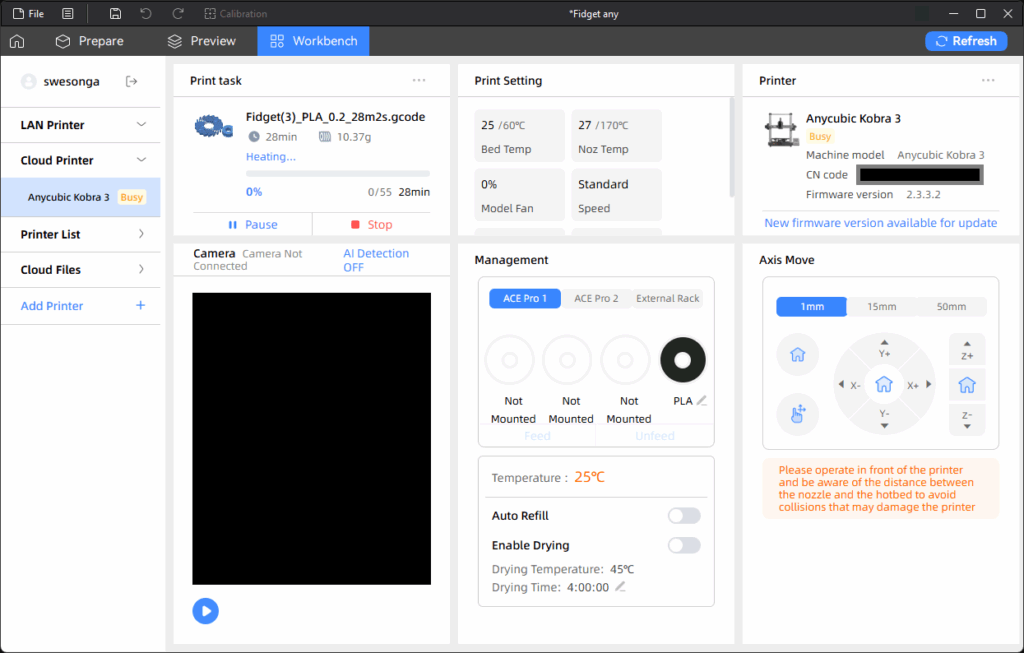
The same thing happened again so I cancelled the printing task. I had set up the 3D printer on a stand-up desk which had a little bit of swaying motion when the printer was at work so I moved the 3D printer onto the floor to see if this could have been the problem. The same broken model was being printed with the printer on the floor so I cancelled the task again. However, this enabled me to rule out the stability of the print platform. The tasks I cancelled are in the “End” tab, along with their start and end times in the images below.
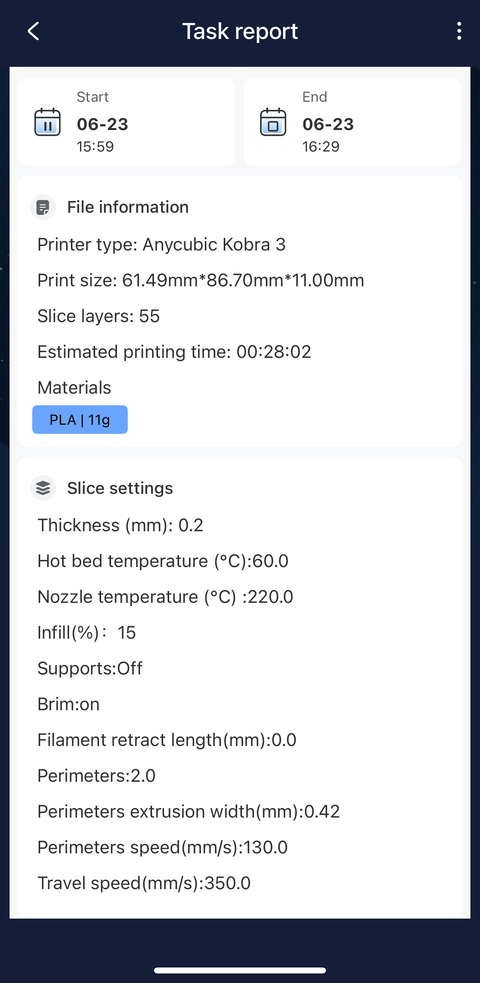
At this point, the remaining question was whether the build platform’s Y-axis was too lose. That could be the cause of the drifting that occurred as the build progressed. I tightened the Y-axis belt tensioner more than what I had initially considered reasonable then printed the model again. This time, the print head appeared to correctly stay within the bounds of the model! The fidget toy was now printed correctly! It was such a relief to know that my unit was functioning correctly and so I didn’t have to start dealing with tech support on a new product.
Desktop Software Installation and Usage
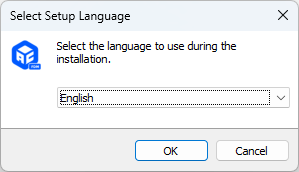
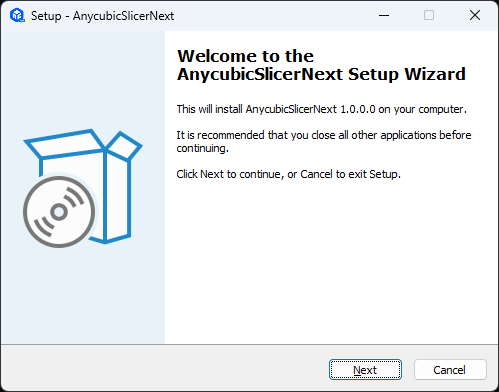
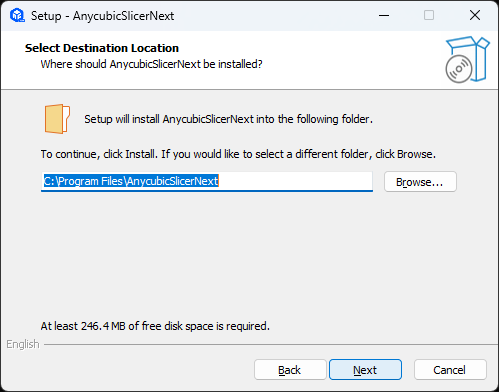
The printer’s accompanying USB stick has the Anycubic Slicer Next installer. I set it up when my initial attempts to connect to the printer on my phone failed.
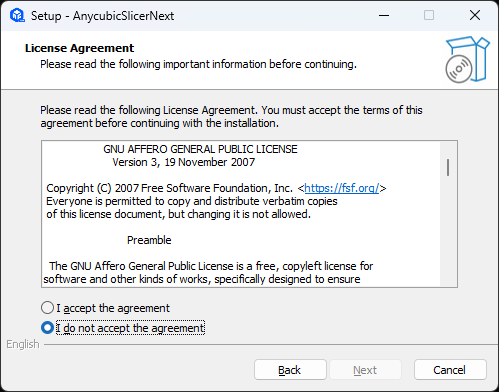
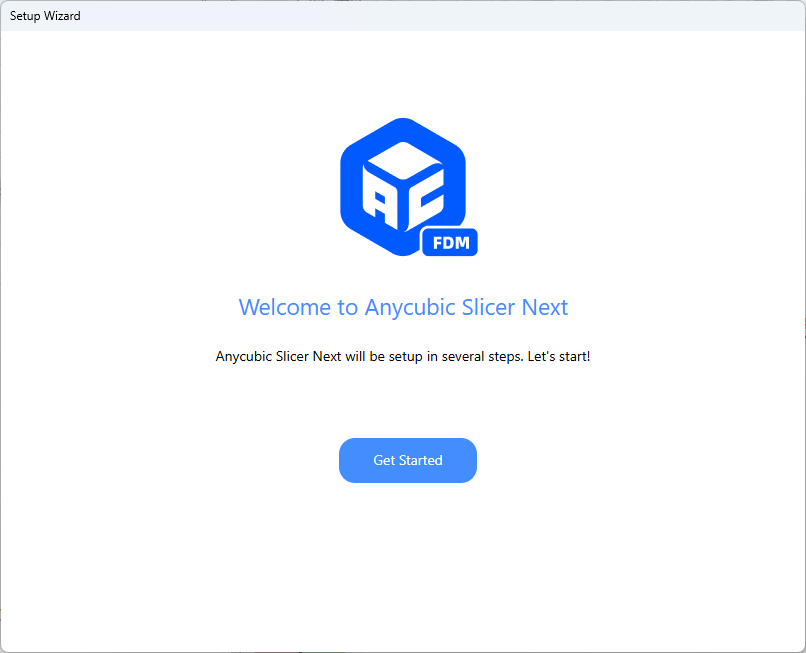
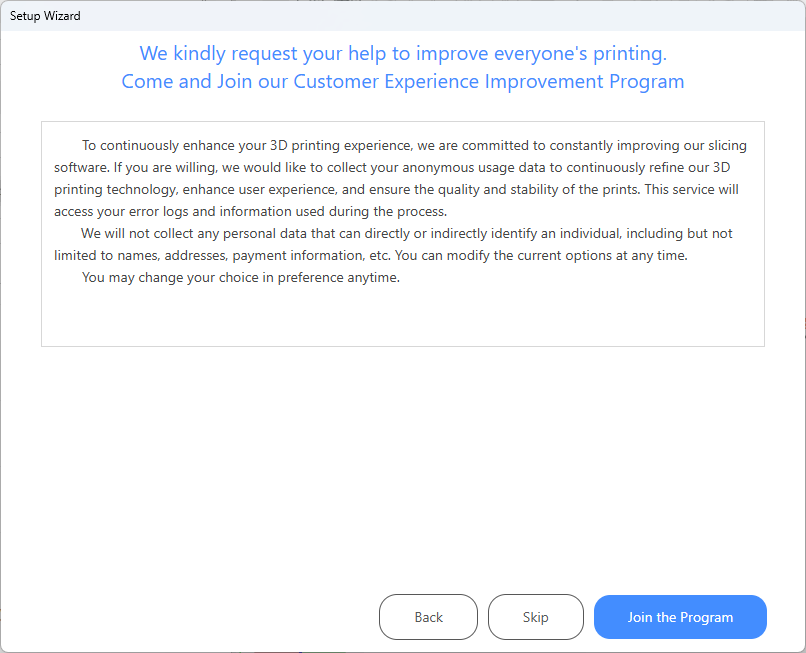
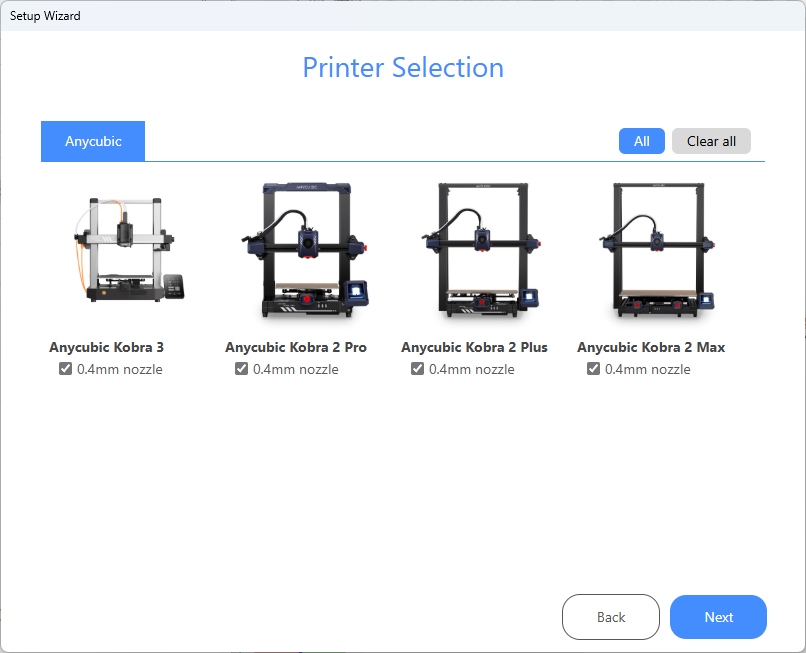
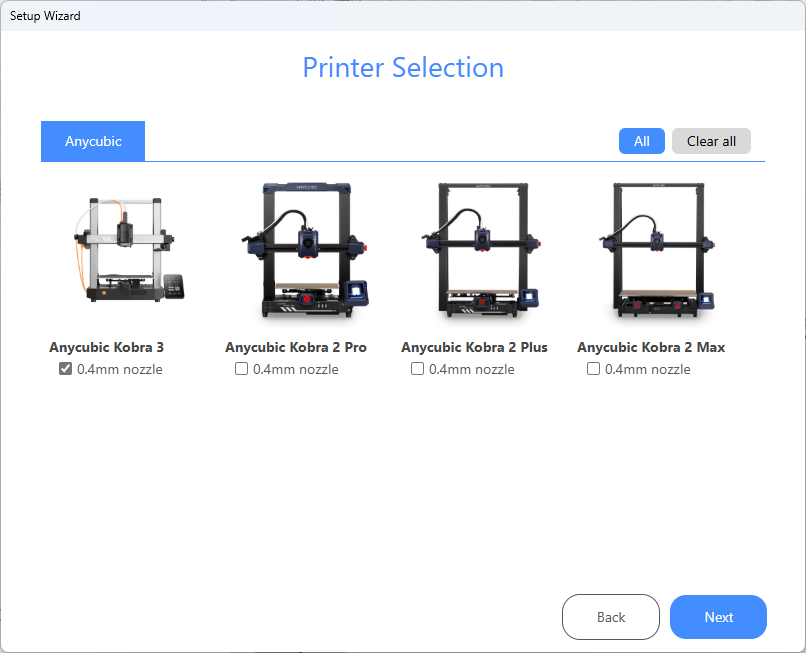
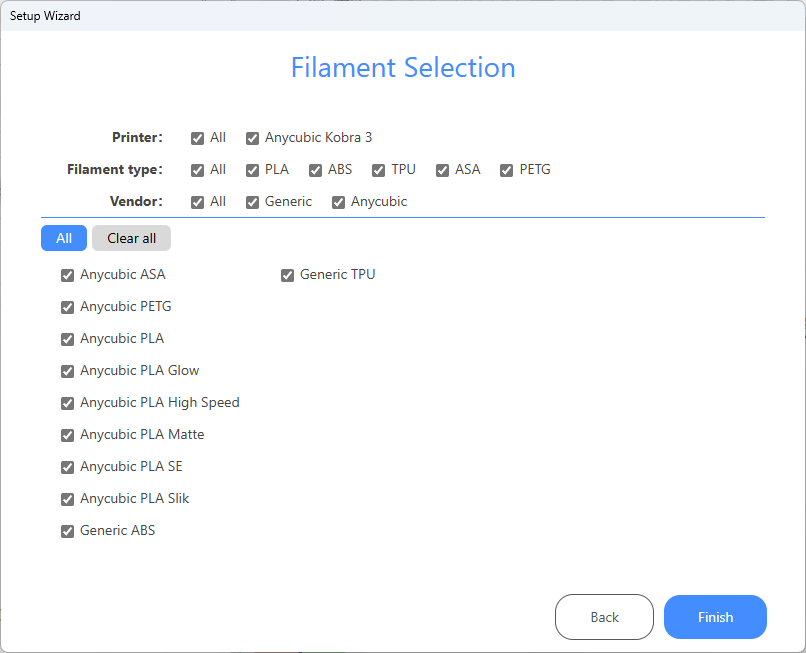
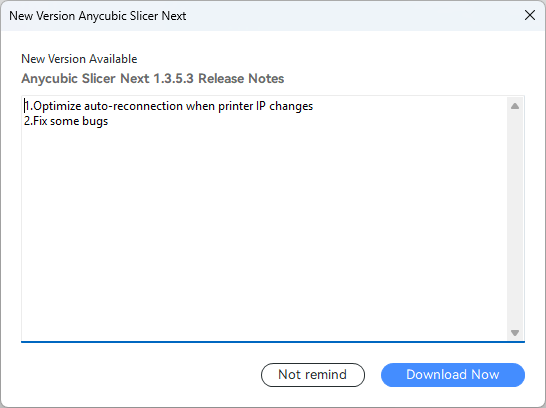
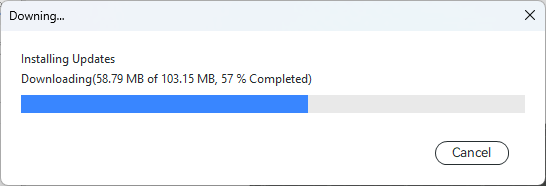
The only change I made in the startup sequence was to disable the other 3D printers. I installed the updates when prompted then logged in after Anycubic Slicer Next loaded.
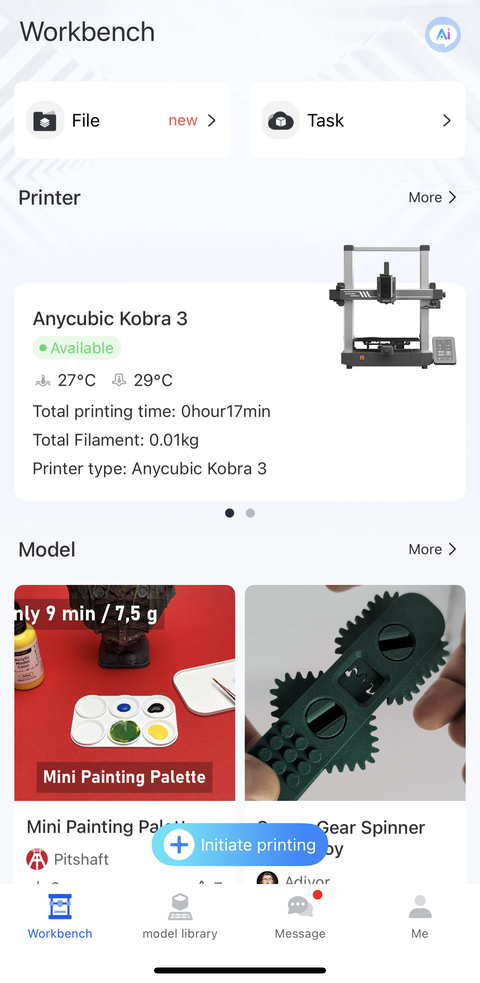
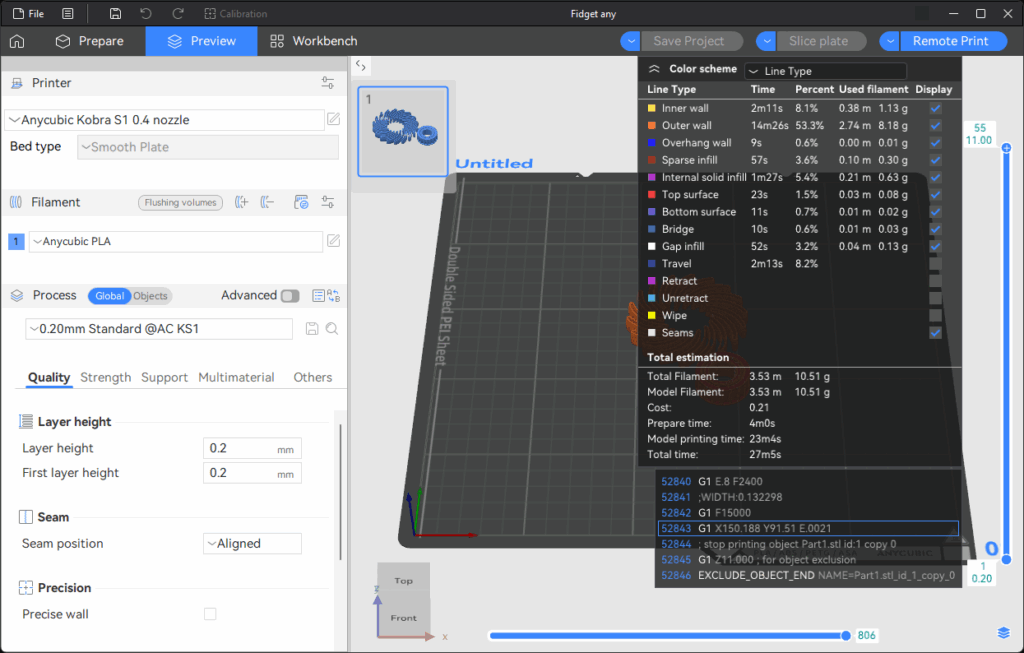
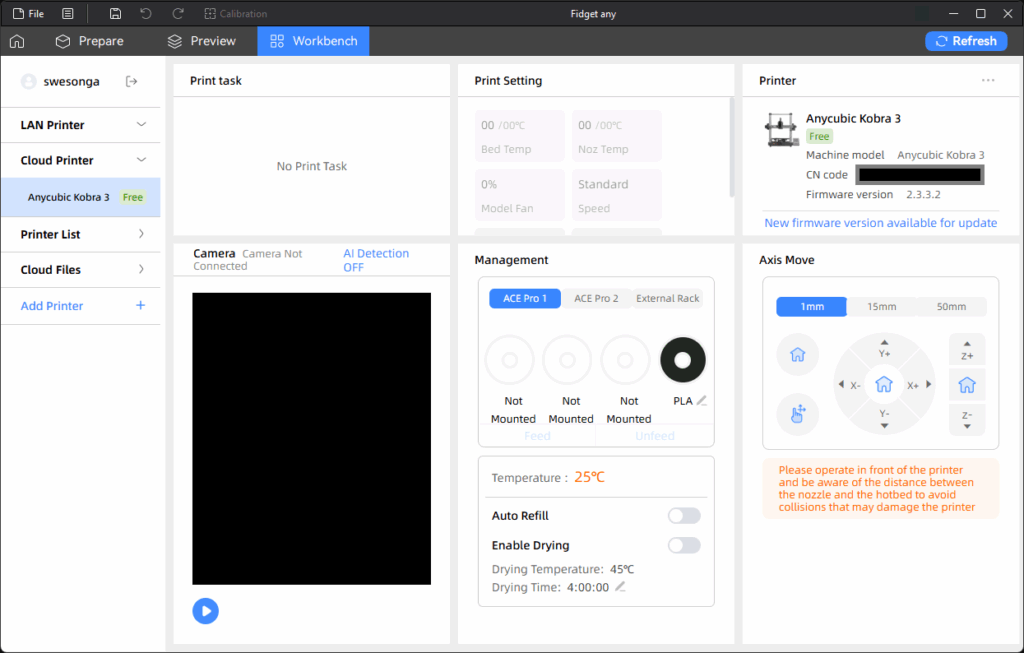
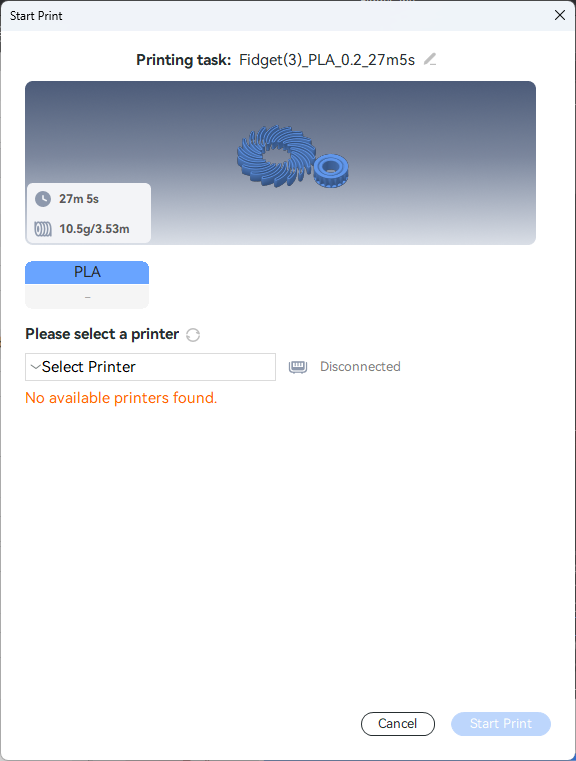
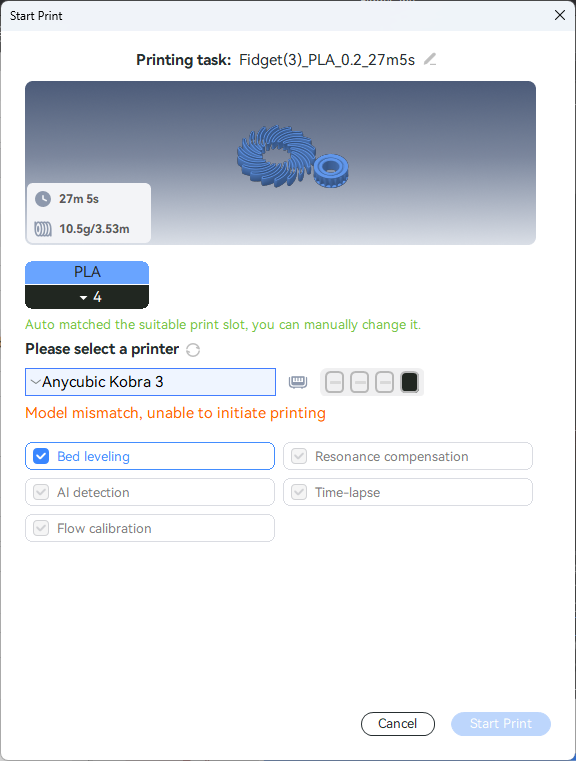
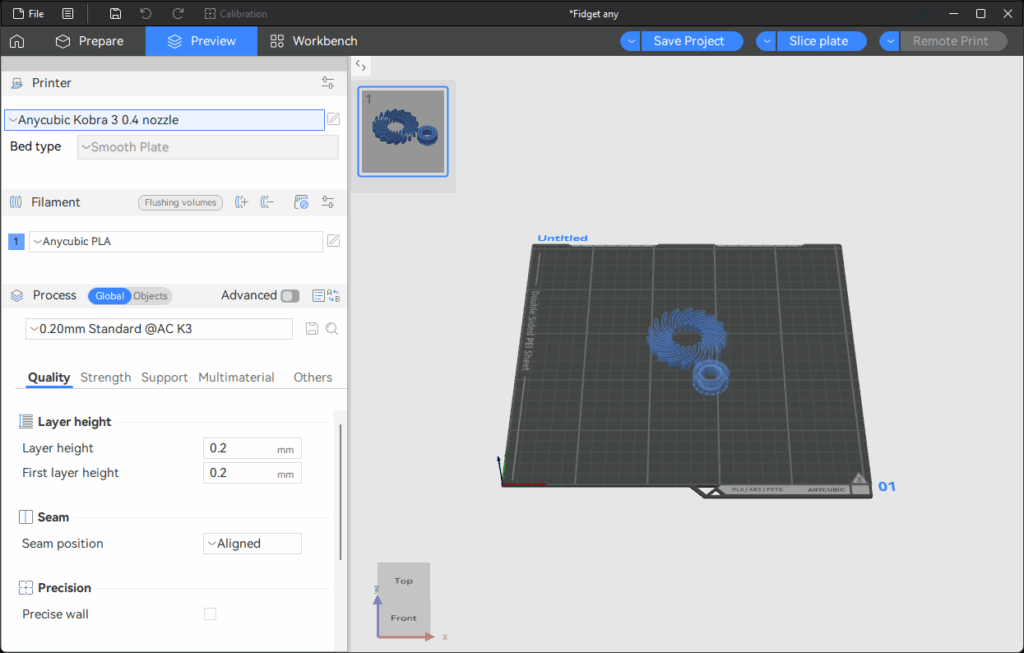
After logging in, I went to the Makeronline tab and found the fidget toy (this was when I had realized that a simpler model would greatly aid my troubleshooting efforts). The firmware updates message on the Workbench page are what prompted me to update the firmware (as phone earlier in the app screenshots from my phone). My first run through this program also had the wrong printer selected. The corresponding error is included in the images below.
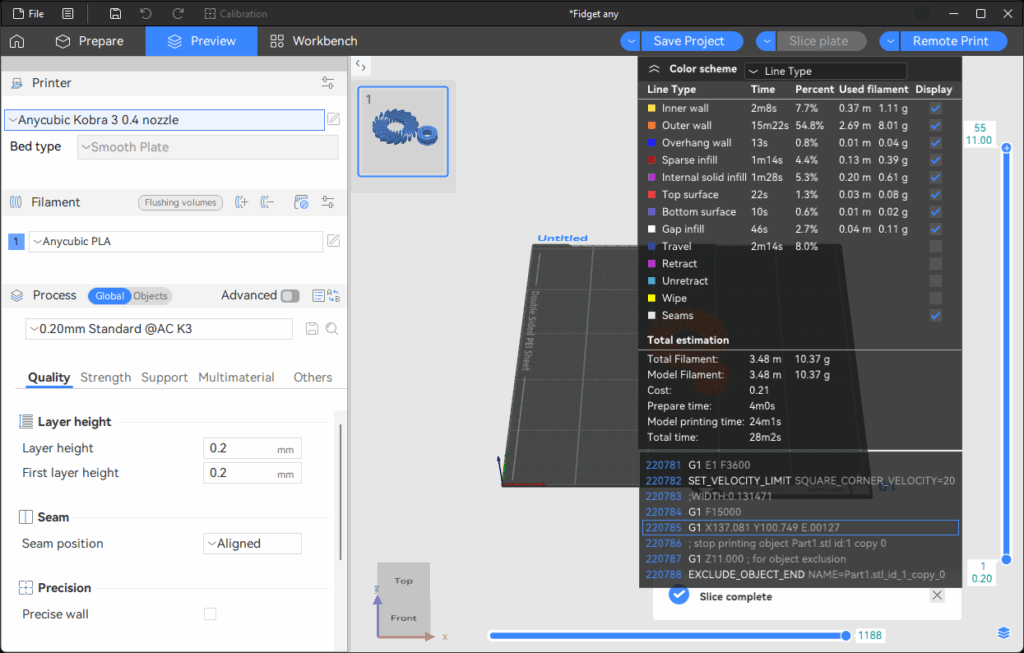
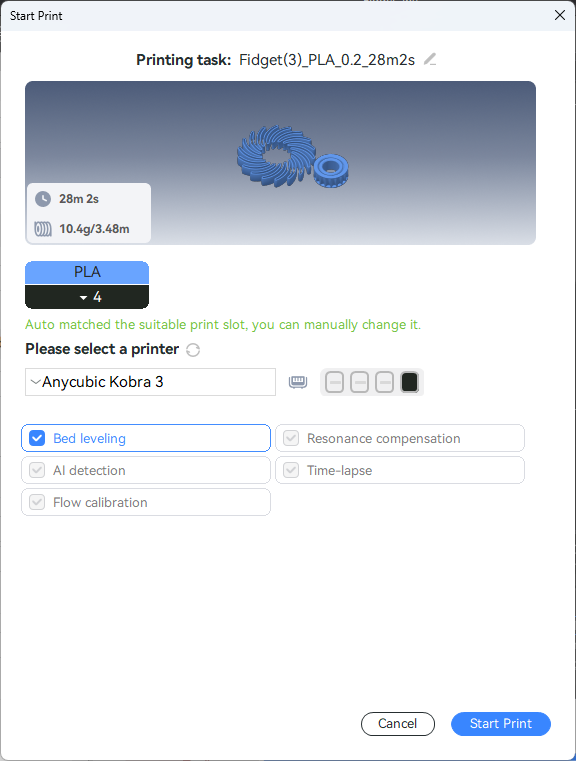
I needed to switch from the Anycubic Kobra S1 0.4 nozzle. Why is this one selected anyway if I only checked mine in the initial startup prompts? Switching to the right printer enabled the print task to start:
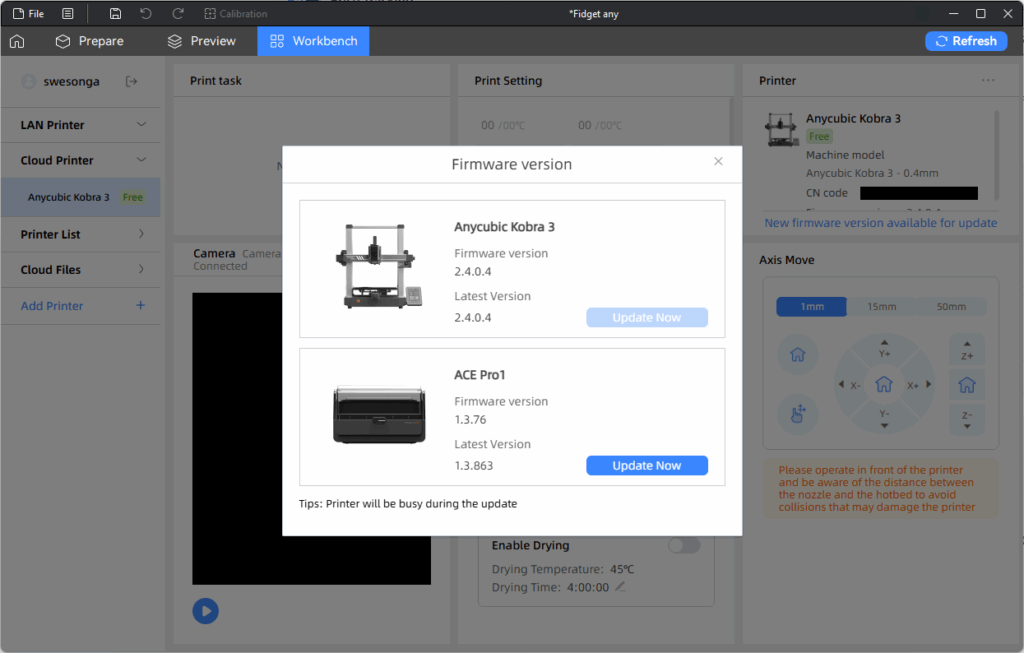
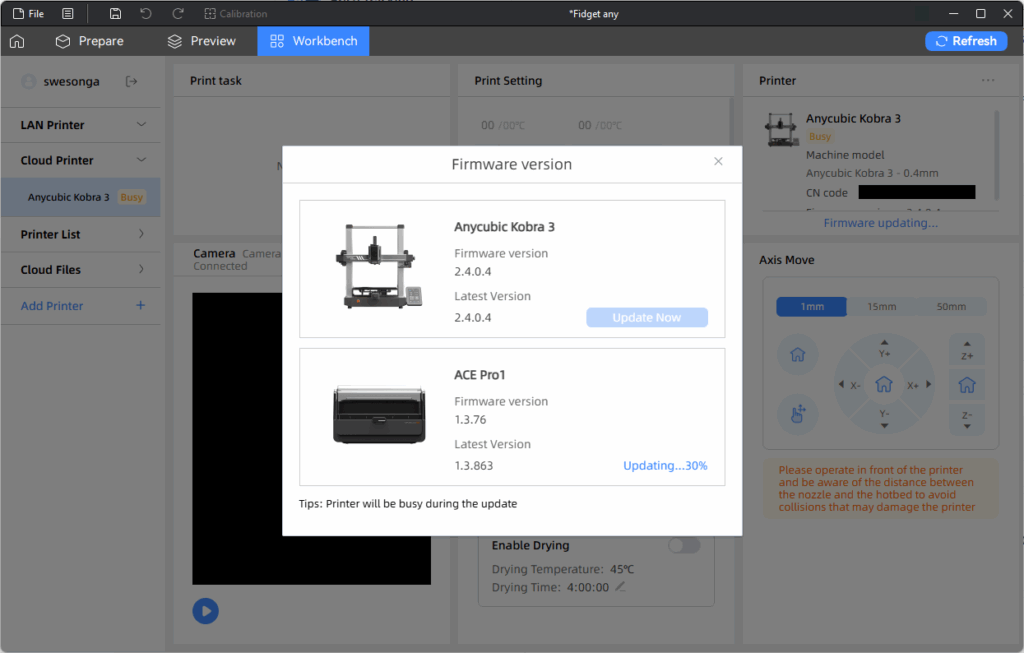
The job started above is the first fidget task I manually ended in the “End” tab of the Tasks page in an earlier screenshot of the app on my phone. After I installed the firmware update using my phone, there was still a “New firmware version available for update” message in the Printer section but it turned out the update was for the ACE Pro this time:
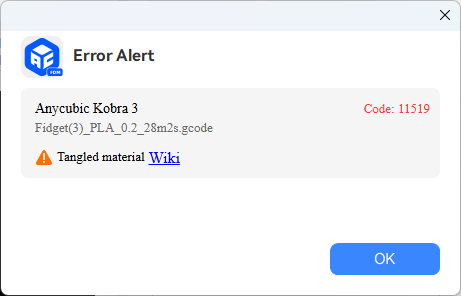
With both devices’ firmware up to date, I started the second attempt of the fidget toy (which failed due to the aforementioned lose Y-axis belt). One error that popped up was this tangled material error alert.
Tangled Material Dialog
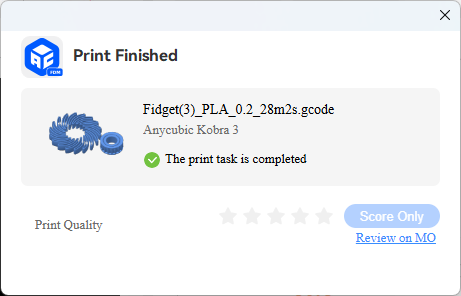
This was when I realized that the orientation of the filament when I loaded it into the ACE (Anycubic Color Engine) was off by 180-degrees around the z-axis. The link is to CODE: 11519 Filament tangle detected, please organize the filament and resume printing | Anycubic Wiki. I re-adjusted the roll and was able to resume printing. The dialog below marked the completion of the final print (after the Y-axis belt was tightened):
Print Finished Dialog
Modeling Software Options
Now that I could print models from Makeronline, the remaining key component was the software for creating my own models. I learned that one of the programs people use is Tinkercad, which is a free web app. Having used SolidWorks in the past, I decided to stick with it. I needed to renew my license though, which turned out to be more involved than I expected (see the post on Troubleshooting my SOLIDWORKS 2025 Installation for details). In the midst of troubleshooting those issues, I realized that I could probably use Blender as well! In conclusion, there are many options for modeling software for exploration and 3D printing.
I installed SOLIDWORKS 2023 Student Edition on my desktop about 2 years ago but did not renew the license after it expired last year. Having just set up a 3D printer, I decided to renew my SOLIDWORKS license to make new models I could print. Since I bought the latest version (2025) from SOLIDWORKS for Students | SOLIDWORKS. I uninstalled SOLIDWORKS 2023 and installed SOLIDWORKS 2025 SP2.0. However, I could not start SOLIDWORKS 2025! It failed with this error:
---------------------------
SOLIDWORKS Product Activation
---------------------------
The current computer identifier (0) does not match the previously used computer identifier (1). You can continue, but you might have activation or deactivation issues in the future.

Please contact you support representative for support.
---------------------------
OK
---------------------------
The OK button then leads to another dialog with this message:
[Window Title]
SOLIDWORKS

[Content]
This Student Edition has expired.

Please browse to the following web location to find out about the new version of SOLIDWORKS Student Edition:

www.solidworks.com/goEDU

[OK]
These is the first set of instructions I got (slightly paraphrased):
Go to the FlexNet Folder (C:\ProgramData\FLEXnet) and rename all ‘SW_D’ files to something like ‘SW_D_old’. Launch SOLIDWORKS again and test the behavior. By default, the “ProgramData” folder is hidden. Either you can activate the “Show hidden folders” option in the “Folder” options, or you can directly enter C:\ProgramData in the address bar to access this folder.
If the above steps do not help, try the steps below
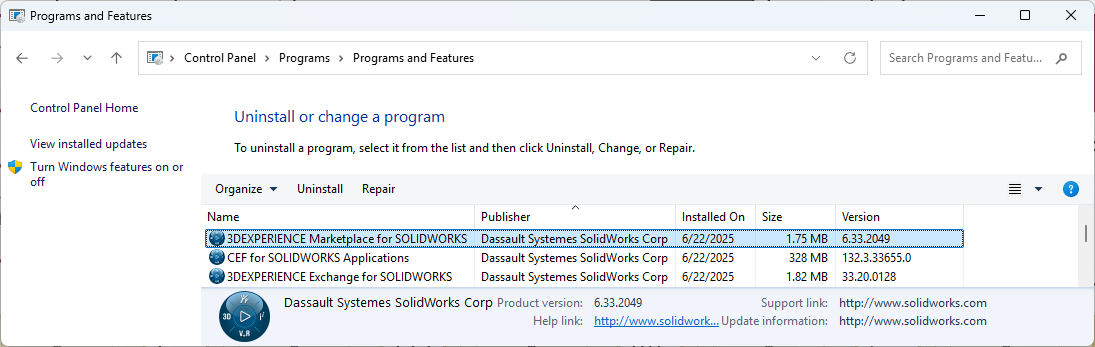
Go to Control Panel\All Control Panel Items\Programs and Features
Search for SOLIDWORKS <version> then right click on it and click ‘Change’
The SOLIDWORKS installation manager will pop up. Click on ‘Repair your installation’.
Once repair is complete, launch SOLIDWORKS and test the behavior.
If the issue still persists, please share the Installation Manager logs on the 3DSupport App for investigation. To go to the Installation log folder, you can type %appdata% at Start > RUN and press Enter, and it will open the “Roaming” folder. In the “Roaming” folder, go to the “SOLIDWORKS” folder. Under the “SOLIDWORKS” folder, you will find a folder named “Installation log.” Zip this complete folder and provide it for investigation.
These steps didn’t work so I uploaded my installation logs. The next set of instructions addressed the problem. Here they are (slightly paraphrased):
To resolve this issue, I recommend uninstalling all SOLIDWORKS versions currently present on your system. Once that is done, then perform the installation again and be sure to enter your new license number [1234…] manually on the serial number page in the “3D Design > SOLIDWORKS” checkbox. If you have purchased the Student Edition, then your new serial number will be present in the post-purchase email. Please follow these installation steps:
Uninstall all SOLIDWORKS versions currently present on your system. Please follow these steps:
Go to Control Panel\All Control Panel Items\Programs and Features
Search for SOLIDWORKS (Version) then right click on it and select ‘Uninstall’.
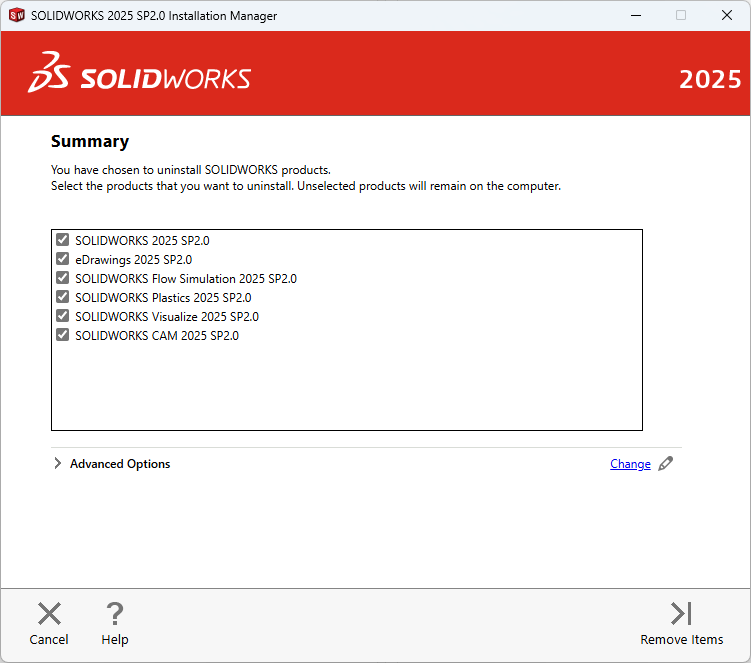
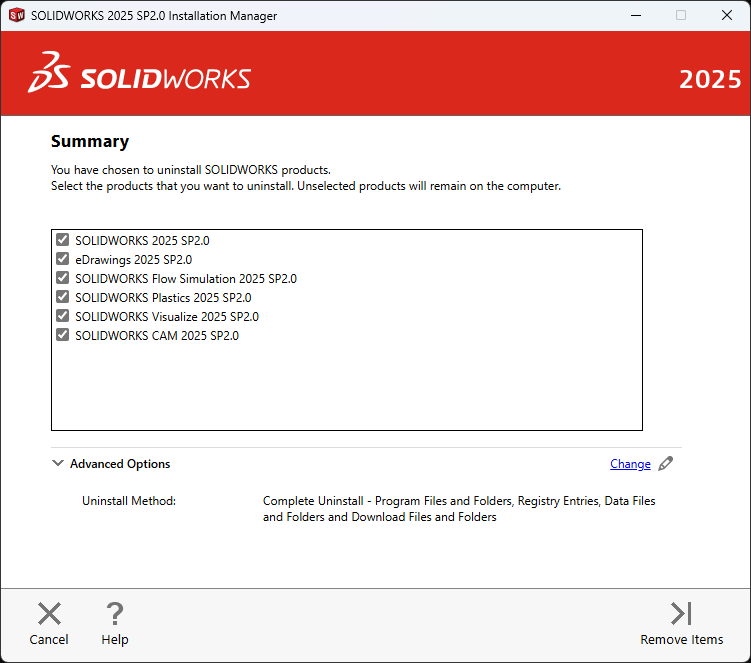
In the Installation Manager window, under ‘Advanced Options’, select ‘Change’.
By default, the ‘Program files and Folders’ will be selected. Select the remaining items (‘Registry Entries’ and ‘Data Files and Folders’) as well.
Click ‘Back to Summary’.
Click on ‘Remove Items’ and let Installation Manager complete the uninstallation.
Once uninstallation is complete, restart your system.
Download the setup file from: www.solidworks.com/SEK
Right-click on the setup file and select ‘Run as administrator’.
On Welcome page > Select ‘Install on this computer’ and click ‘Next’.
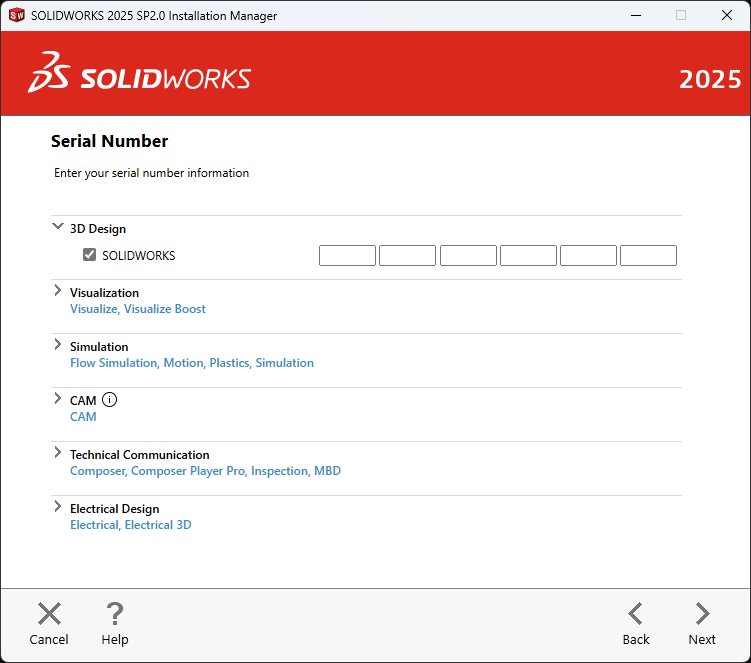
On the Serial Number screen, enter your latest serial number [1234…] manually in the 3D Design > SOLIDWORKS checkbox only. Please leave all the other product’s [like composer, Visual, simulation, etc..] serial number checkboxes blank and unchecked. See the attached image for your reference.
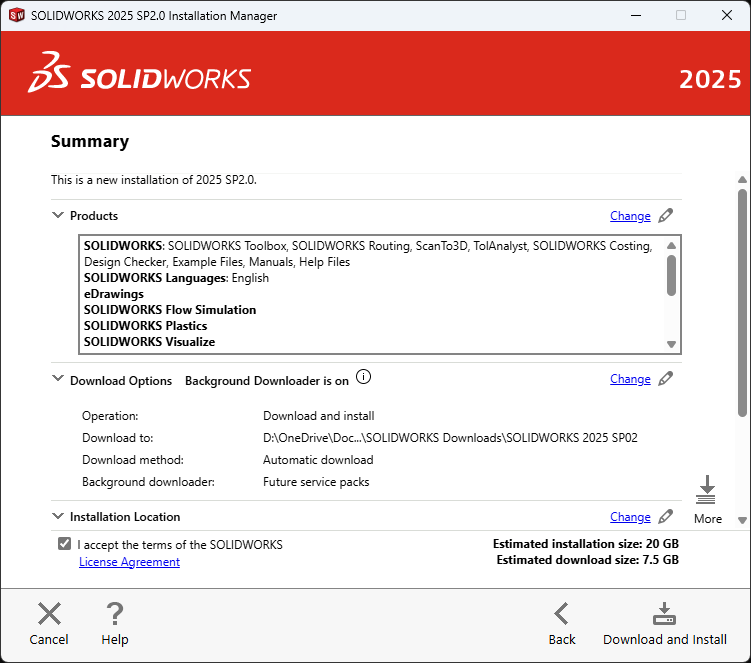
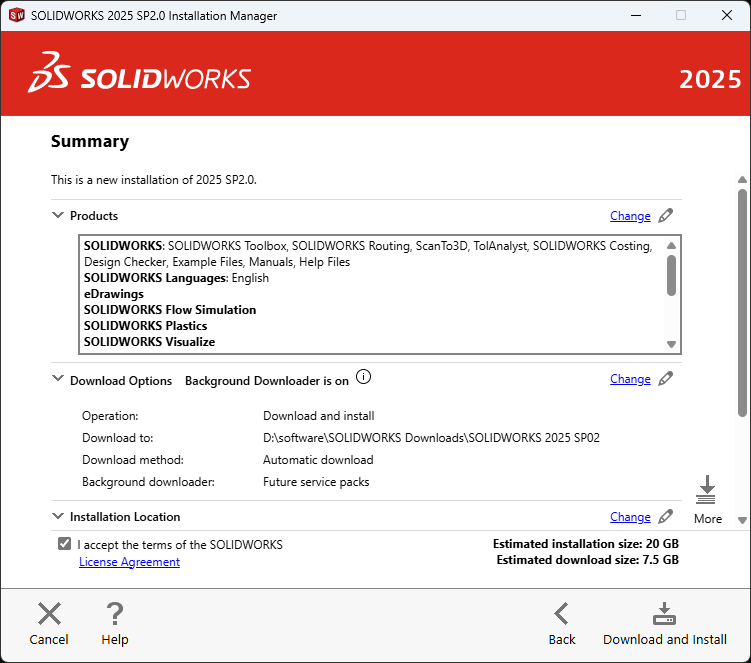
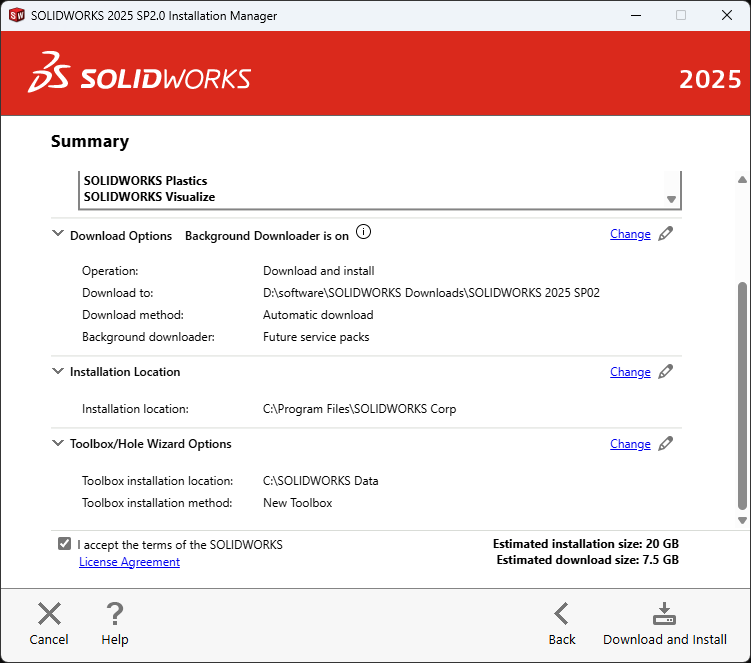
On the Summary screen > Under Products, click ‘change’ > untick the unwanted
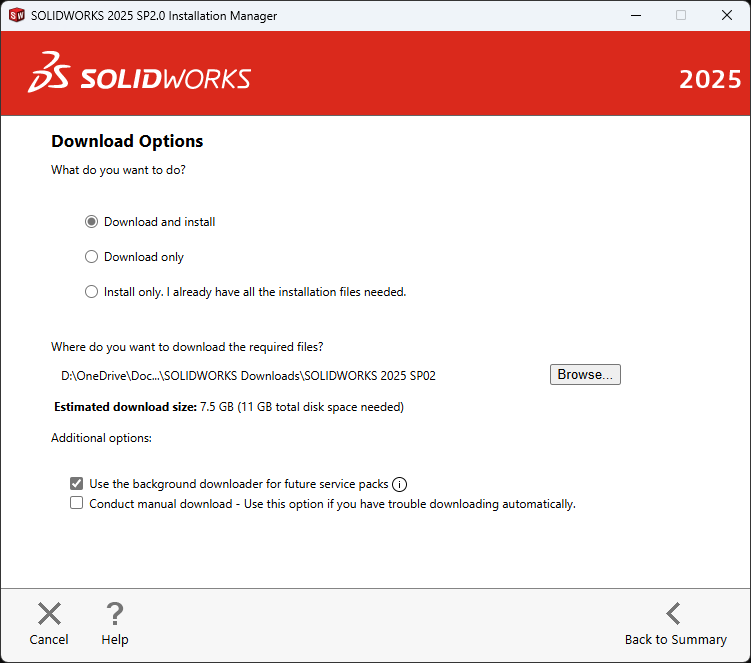
On the Summary screen > Download Option, click ‘change” > select ‘Download and Install’.
On the Summary screen, click ‘Install Now’.
Uninstalling SOLIDWORKS 2025
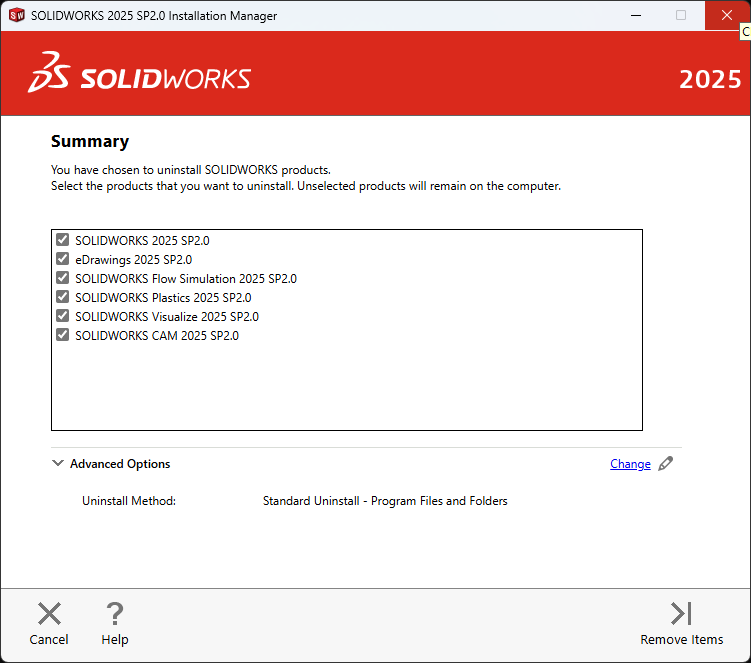
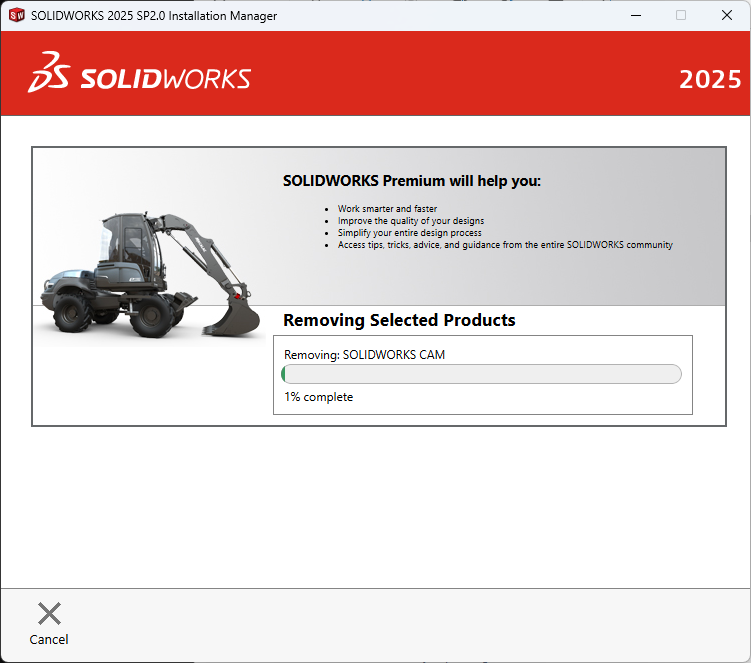
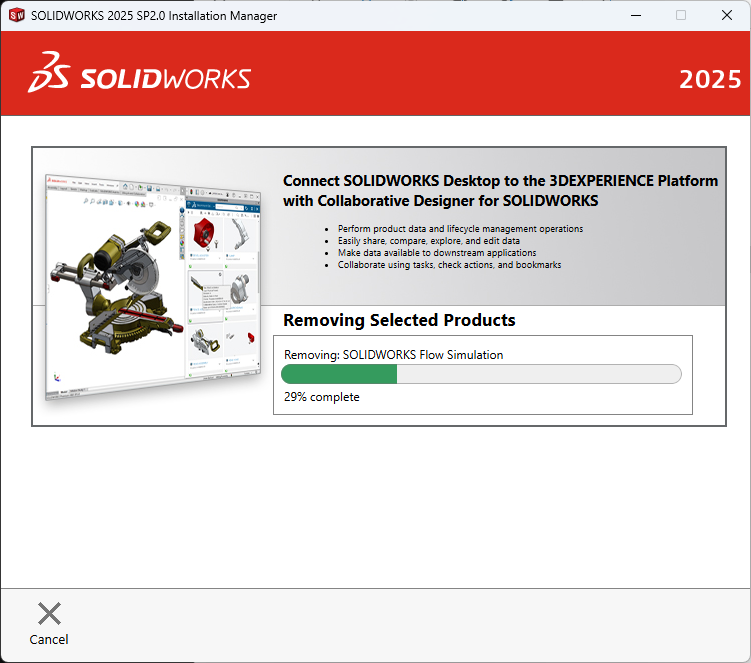
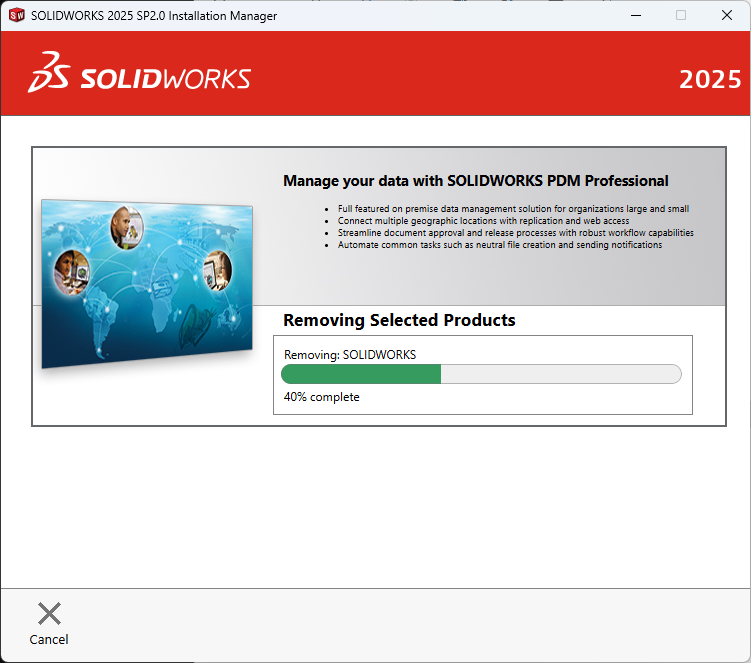
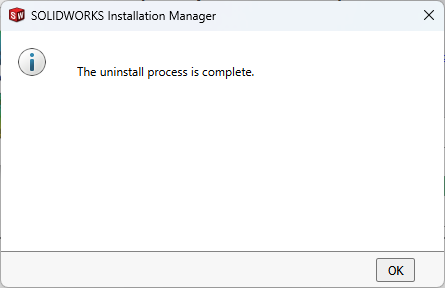
The first time I uninstalled SOLIDWORKS 2025, I didn’t adjust the “Advanced Options”:
After uninstalling it, the SOLIDWORKS Login Manager was still listed as installed in the control panel. I uninstalled it as well then later realized that I missed other products from Dassault Systemes.
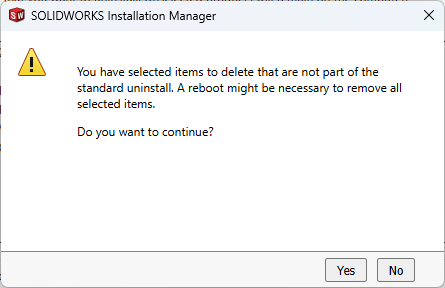
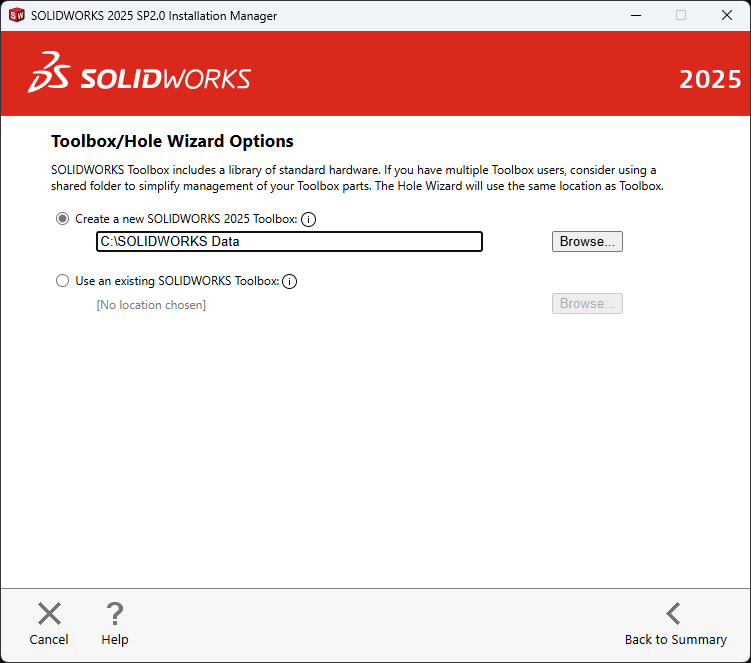
I entered the correct serial number on the installation this time. I also noticed that the install path is in C:\dev (which also has SOLIDWORKS 2023 files). I didn’t remember how I created that directory the last time I installed SOLIDWORKS (nothing else would automatically go into my \dev directory). After all this, the same error message is displayed when trying to start SOLIDWORKS. This was because I skipped the most important steps in the uninstallation. I paid careful attention to the options the next time I uninstalled it! Before uninstalling it, I poked around and found that I the license is in HKEY_LOCAL_MACHINE\SOFTWARE\SolidWorks\Licenses\Serial Numbers. The slideshow below shows the advanced options that need to be selected for a full uninstall.
These are the files and folders that were to be removed on my desktop:
Program Files and Folder:
C:\Program Files\SOLIDWORKS Corp\SOLIDWORKS CAM\
C:\Program Files\SOLIDWORKS Corp\SOLIDWORKS Visualize\
C:\Program Files\SOLIDWORKS Corp\SOLIDWORKS Plastics\
C:\Program Files\SOLIDWORKS Corp\SOLIDWORKS Flow Simulation\
C:\Program Files\SOLIDWORKS Corp\eDrawings\
C:\Program Files\SOLIDWORKS Corp\SOLIDWORKS\

Registry Entries:
HKCU\Software\SolidWorks
HKLM\Software\Wow6432Node\SolidWorks
HKLM\Software\SolidWorks
HKCU\Software\SRAC
HKLM\Software\SRAC
HKCU\Software\eDrawings
HKLM\Software\eDrawings

Data Files and Folder:
C:\software\SOLIDWORKS Data (2)
C:\ProgramData\SolidWorks
C:\ProgramData\COSMOS Applications
C:\Users\Public\Documents\SolidWorks
C:\ProgramData\DassaultSystemes

Download Files and Folder:
C:\dev\Downloads\SolidWorksFiles\SOLIDWORKS 2023 SP02.1
C:\dev\Downloads\SolidWorksFiles\SOLIDWORKS 2025 SP02
After uninstallation completed, I decided to inspect the registry (using the reg query command) to see what was left. 6 of the 7 registry entries returned “ERROR: The system was unable to find the specified registry key or value.” Only the HKEY_LOCAL_MACHINE\SOFTWARE\SolidWorks key still contained data.
C:\>reg query "HKEY_LOCAL_MACHINE\SOFTWARE\SolidWorks" /s

HKEY_LOCAL_MACHINE\SOFTWARE\SolidWorks\AddIns

HKEY_LOCAL_MACHINE\SOFTWARE\SolidWorks\AddIns\{219180B0-7183-4FE2-B167-4E2BFE534004}
    (Default)    REG_DWORD    0x1
    Description    REG_SZ    Access to digital manufacturers worldwide, sourceable 3D components, and more. v6.33.2049
    Title    REG_SZ    3DEXPERIENCE Marketplace
    Icon Path    REG_SZ    C:\Program Files\Common Files\SOLIDWORKS Shared\3DEXPERIENCE Marketplace\I_3DEXPERIENCEPlatform_16.png

HKEY_LOCAL_MACHINE\SOFTWARE\SolidWorks\AddIns\{fb5ac345-200b-44d2-9ffa-69b7d44fc36f}
    (Default)    REG_DWORD    0x0
    Description    REG_SZ    Work with a package of content from a 3DEXPERIENCE source, such as SOLIDWORKS Connected or the Design with SOLIDWORKS app.
    Title    REG_SZ    3DEXPERIENCE Exchange
    Icon Path    REG_SZ    C:\Program Files\Common Files\SOLIDWORKS Shared\3DEXPERIENCE Exchange\Resources\3dexperience_exchange-20px.png
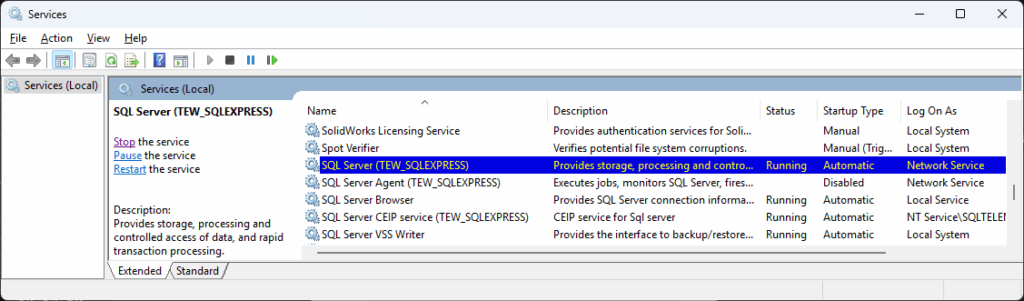
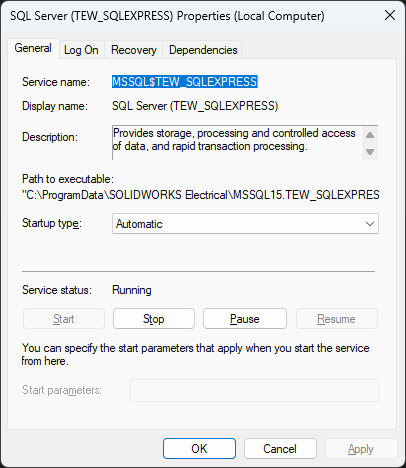
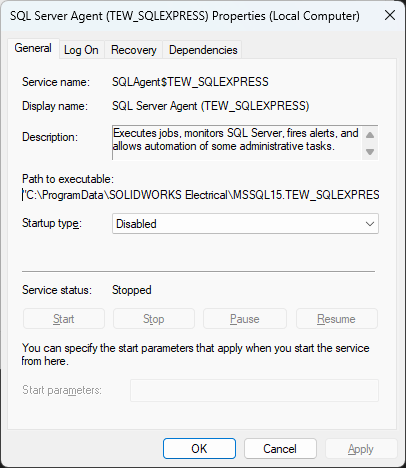
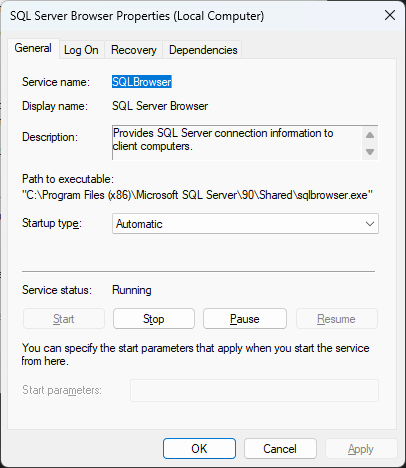
The path “C:\Program Files\SOLIDWORKS Corp” now contained 0 files but still contained 2 folders: “SOLIDWORKS Electrical” and “eDrawings” (which looked harmless). The other directories had been removed. There was still a “C:\ProgramData\SOLIDWORKS Electrical” directory though. I could not remove it because “C:\ProgramData\SOLIDWORKS Electrical\MSSQL15.TEW_SQLEXPRESS\MSSQL\Binn\batchparser.dll” was open in the SQL Server (TEW_SQLEXPRESS) service. The path to its executable was "C:\ProgramData\SOLIDWORKS Electrical\MSSQL15.TEW_SQLEXPRESS\MSSQL\Binn\sqlservr.exe" -sTEW_SQLEXPRESS. The disabled agent’s path was "C:\ProgramData\SOLIDWORKS Electrical\MSSQL15.TEW_SQLEXPRESS\MSSQL\Binn\SQLAGENT.EXE" -i TEW_SQLEXPRESS and the CEIP service executable path was "C:\ProgramData\SOLIDWORKS Electrical\MSSQL15.TEW_SQLEXPRESS\MSSQL\Binn\sqlceip.exe" -Service TEW_SQLEXPRESS. See the properties of these services below.
I stopped the SQL Server (TEW_SQLEXPRESS) and SQL Server CEIP service (TEW_SQLEXPRESS) services. I could now delete the “C:\ProgramData\SOLIDWORKS Electrical” directory. Notice that there was also a SolidWorks Licensing Service but it was stopped. The path to its executable was "C:\Program Files (x86)\Common Files\SolidWorks Shared\Service\SolidWorksLicensing.exe" and it was the only file under the “SolidWorks Shared” directory. I deleted it (even though this left the service entry). I didn’t recall how I set up the 2023 version but I have setup files in C:\dev\Downloads\SolidWorks so I just manually deleted that entire folder.
Installing SOLIDWORKS 2025
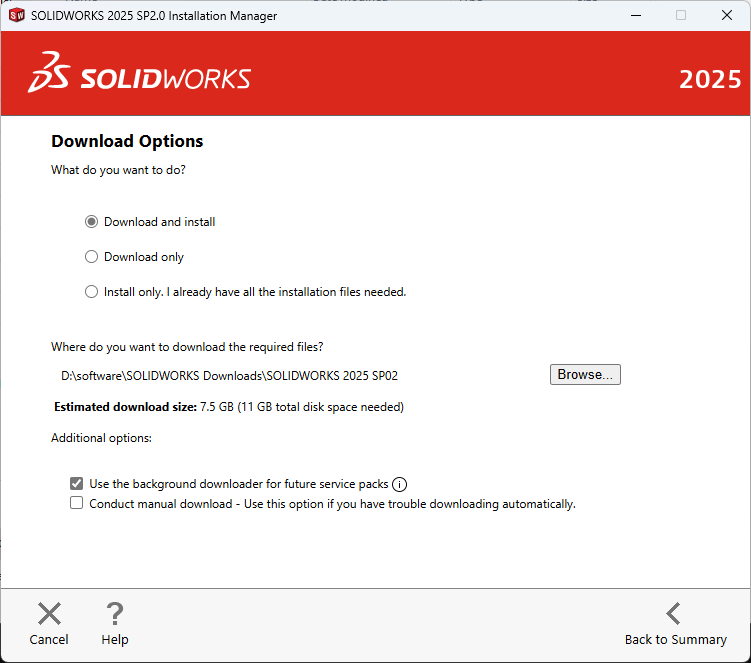
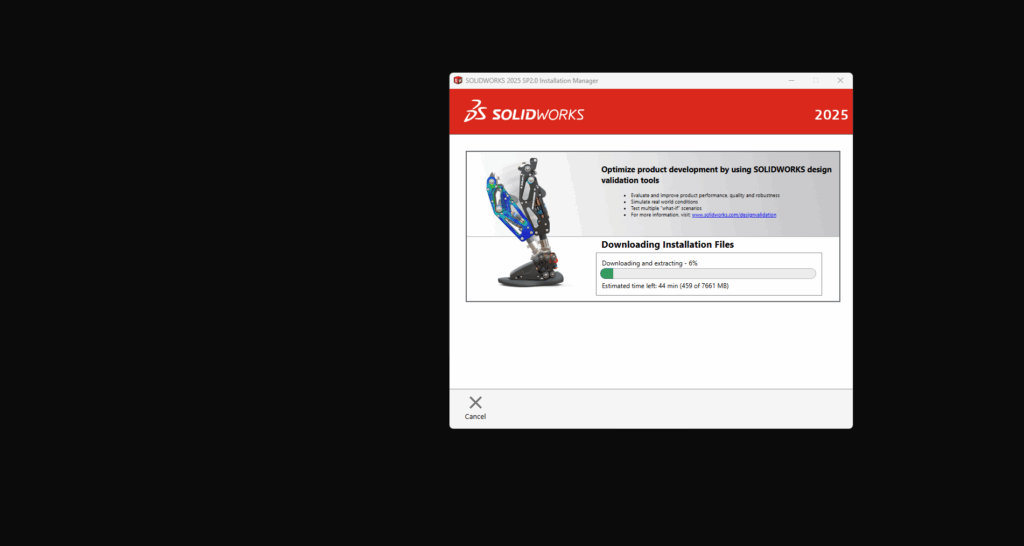
After the full uninstall described above, there was no serial number prepopulated into the installer this time! The default Download to path was in my documents folder, which is on OneDrive. Aha, this must be why I had changed it to C:\dev\Downloads\SolidWorks – no need to store a couple of GBs of installers on OneDrive.
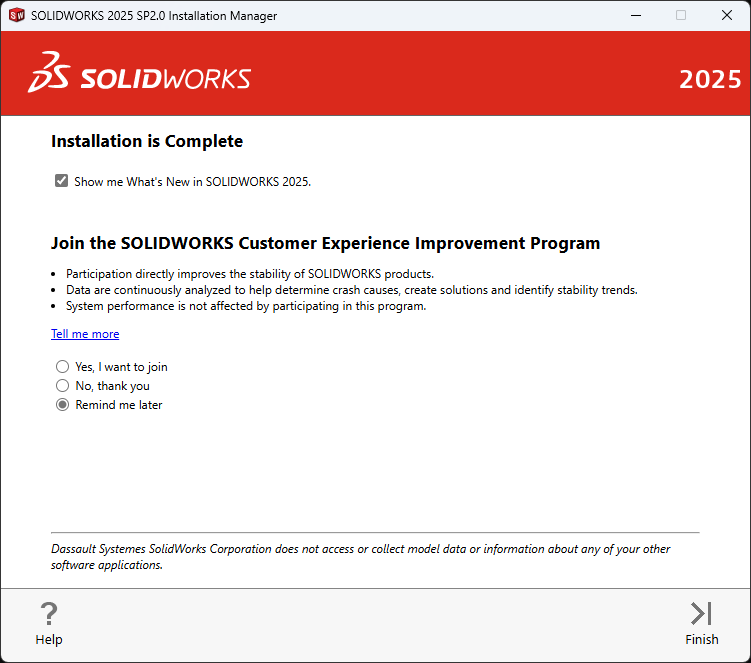
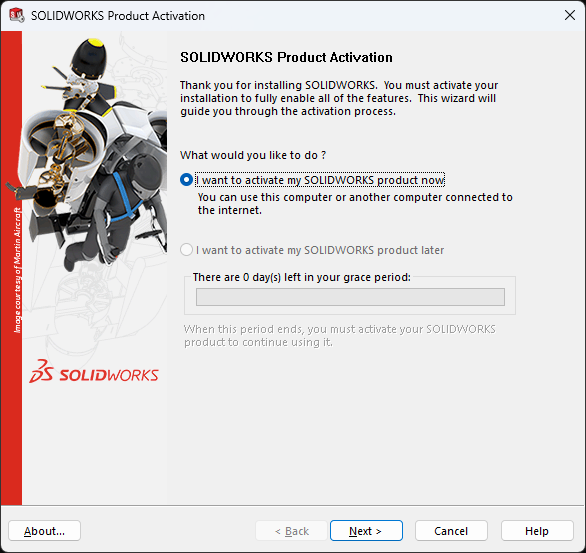
Once installation completed, all I needed to do is enter my email and click “next” to activate the product.
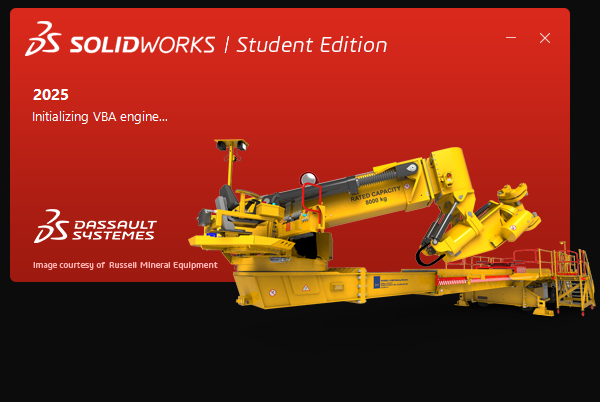
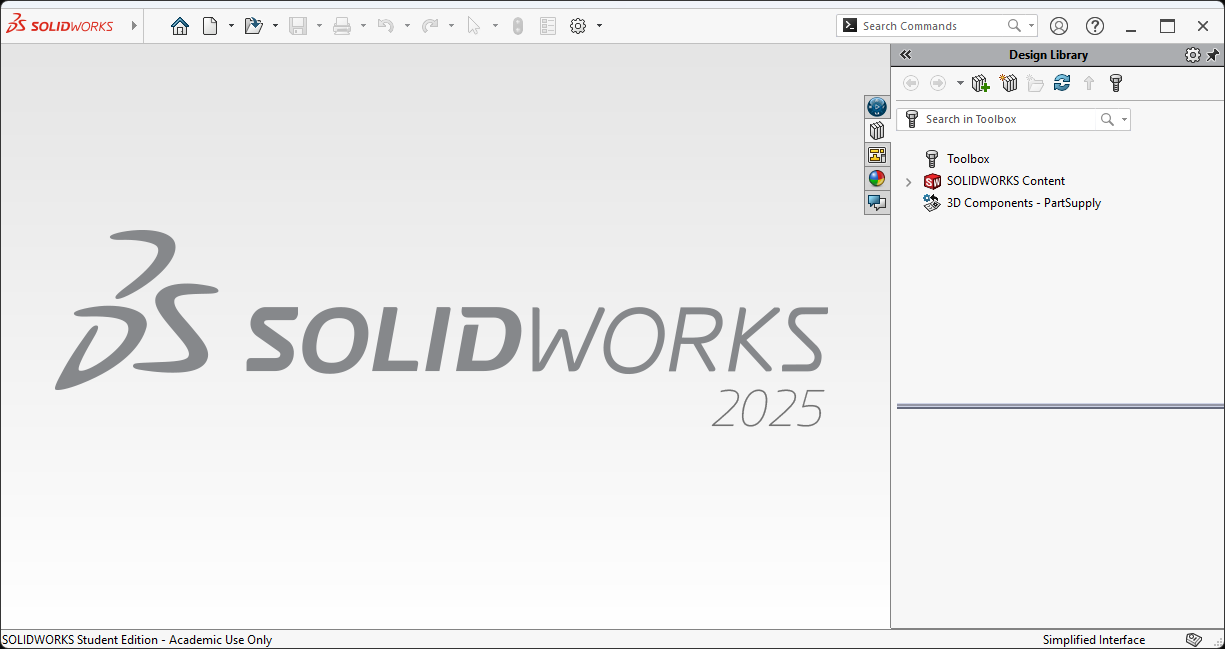
SOLIDWORKS 2025 now started up successfully! The root cause of all my problems was that I didn’t do a full uninstall of SOLIDWORKS 2023!
I recently bought a 3D printer for some SolidWorks 2023 models I have been working on. I was reading through the applications of SolidWorks but was struggling to motivate myself to read through the overview of 3D printing technologies. I was therefore thrilled to find this series on Material Science in Additive Manufacturing: Basics. These are the technologies I reviewed (with the first two videos embedded at the end of this post):